Dr Sumit Badhwar's

Bone & Joint Clinic

NOIDA,

Arthroscopic Surgery of Knee Replacement in Noida

Knees that have stopped responding to medicines, physiotherapy or injections usually reach a point where the cartilage is too far gone to repair. That’s when knee replacement enters the conversation. The newer-generation approach — often called arthroscopic knee replacement or minimally invasive knee replacement — uses smaller incisions and tissue-sparing techniques to fit the same implant with less collateral damage to the soft tissues around the joint.

At Bone & Joint Clinic in Sector 31, Noida, Dr Sumit Badhwar has been performing knee replacements with minimally invasive principles for more than 15 years. If you’ve been searching for Arthoscopic knee replacement in Noida and want a straight answer about what it actually is, who it suits and what recovery looks like, the rest of this page covers it.

What is Arthroscopic Knee Replacement?

First, an honest clarification because the term gets used loosely. A full knee replacement cannot be done through pure arthroscopy — the worn joint surfaces have to be resurfaced and a metal-and-polyethylene implant fitted, which needs direct surgical access. What is actually meant by “arthroscopic knee replacement” is a minimally invasive technique where the principles of keyhole surgery are applied wherever possible. In practice that means:

  • An incision of around 10–12 cm instead of the traditional 20–25 cm.
  • Arthroscopic-assisted visualisation at specific steps to confirm alignment and remove debris.
  • The kneecap is moved aside rather than flipped over, which protects the extensor mechanism.
  • The quadriceps tendon is preserved as much as the case allows.
  • Soft-tissue dissection is kept to a minimum, which is what drives the faster recovery.

The implant itself is the same as in a conventional replacement. The route to it is gentler. For pure keyhole work on the knee without an implant — meniscus, ACL, cartilage repair — see Arthroscopic Knee Surgery in Noida. For broader joint keyhole procedures, see Arthroscopic surgery in Noida.

Conditions Treated at the Bone & Joint Clinic

Patients who actually benefit from knee replacement — rather than another round of knee surgery in Noida like arthroscopy or injections — usually fall into one of these groups:

• Advanced osteoarthritis with bone-on-bone wear visible on weight-bearing X-rays.

Rheumatoid arthritis with severe joint damage that medication can no longer control.

Post-traumatic arthritis after a major knee injury or fracture that healed poorly.

Avascular necrosis of the femoral condyles.

Severe deformity (varus or valgus) with disabling pain and visible bowing of the leg.

Failed prior knee surgeries where conservative options are exhausted.

For less advanced cases where some cartilage is still intact, arthroscopic knee surgery or cartilage-preservation work is usually the smarter first step. Likewise, ligament injuries and sports-related knee problems almost never need replacement. The decision is based on imaging, the specific pattern of damage, and how much the knee is actually affecting day-to-day life — not on age alone.

The Arthroscopic Knee Replacement Procedure

Day of surgery looks something like this:

1. Admission and anaesthesia.

Usually spinal or regional. General anaesthesia is used in selected cases.

2. A smaller incision of

around 10–12 cm over the front of the knee.

3. Tissue-sparing exposure

of the joint without flipping the kneecap, with arthroscopic-assisted visualisation at key steps.

4. Resurfacing

of the damaged ends of the femur, tibia and (where needed) the patella using precise bone cuts.

5. Trial components

to confirm fit, alignment and ligament balance.

6. The final implant

is fixed in place, usually with bone cement.

7. Closure in layers

with a soft dressing. No heavy plaster.

Surgery time is roughly 60 to 90 minutes per knee. Most patients are stood up and made to take a few supported steps within 24 hours. Typical hospital stay is 3 to 5 days, depending on age, fitness and how rehab is progressing.

Have X-rays or an MRI you’d like reviewed before booking? Send them across when you request your appointment. Dr Badhwar reviews imaging before the consultation, so the visit isn’t spent on basics.

The Arthroscopic Surgery Procedure

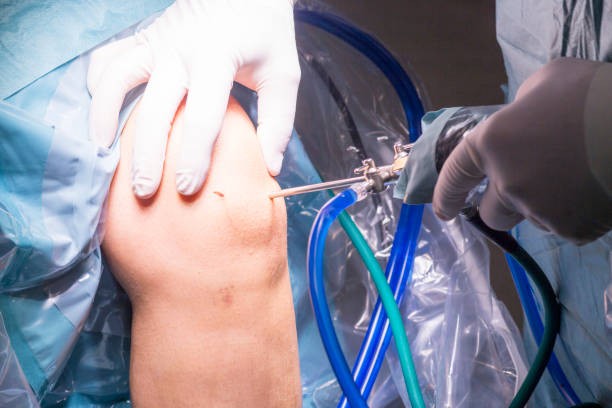
Day of surgery is usually shorter than people expect. Admission is in the morning, the procedure itself runs 30 to 90 minutes depending on what’s being done, and most patients are discharged the same evening or the next morning.

Step by step:

1. Anaesthesia.

Usually spinal or regional. General anaesthesia is used in selected cases.

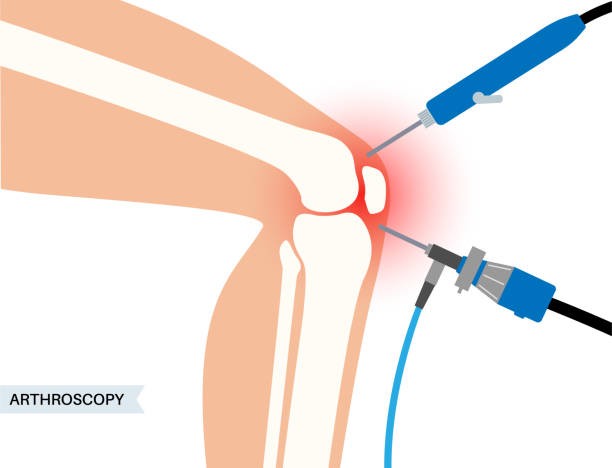
2. Two small incisions

of about 5 to 10 mm on either side of the patella.

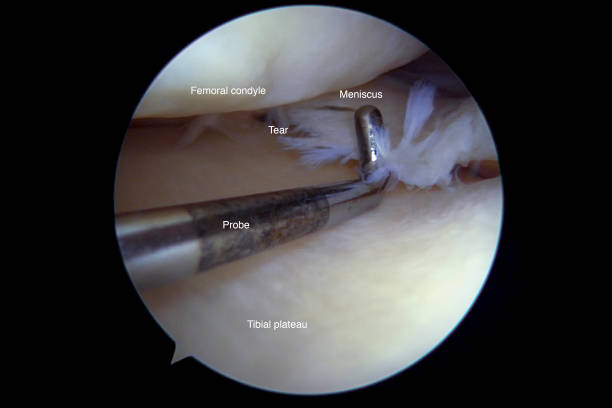
3. The arthroscope goes in.

The team watches the inside of the joint on a high-definition monitor.

4. Saline fluid distends

the joint to give a clear field of view and flush debris.

5. The repair is done

through the second incision — trimming a meniscus, drilling tunnels for an ACL graft, removing loose bodies, releasing a tight band, whatever the case calls for.

6. Instruments come out.

Each incision is closed with one or two stitches.

7. A soft dressing goes on.

No heavy plaster. A knee brace is used when the ligament repair requires it.

You’ll be moved to recovery, given pain relief, and observed for a few hours before going home with a walking aid and a written rehab plan.

Why Choose Bone & Joint Clinic foArthroscopic Surgery of Knee Replacement in Noida ?

A few things actually matter when picking a surgeon for a knee replacement, and most of them aren’t on a billboard:

Volume and track record.

Over 300 joint replacements performed by Dr Badhwar, with a strong record on infection rates and implant longevity. For broader context see knee replacement surgeon in Noida.

One team from diagnosis to discharge.

Imaging review, surgery, physiotherapy and follow-up all happen at Bone & Joint Clinic, Sector 31. You aren't handed off between three facilities.

UK sports medicine training.

Queens Medical Centre, Nottingham. Useful for active patients who want to return to walking, cycling or golf after surgery.

Honest assessment of whether replacement is even needed.

An X-ray showing osteoarthritis doesn't automatically mean surgery is next. Conservative pain management is offered first when that's the right call.

Imported implants

used where appropriate, matched to patient anatomy and activity level.

Early rehab.

Physiotherapy starts within 24 hours, with a written rehab plan you take home.

For Dr Badhwar’s full background, training and qualifications, see Best Orthopaedic Doctor in Noida.

FAQs

How long does the surgery take?

Around 60 to 90 minutes per knee, plus anaesthesia and recovery time.

There is post-operative pain, but it is well controlled with modern multimodal pain protocols. Most patients describe it as manageable.

With support, within 24 hours. Independent walking usually returns within 4 to 6 weeks.

Yes. Physiotherapy is part of the result, not an add-on. Range-of-motion exercises start within 24 to 48 hours. Strengthening builds up over the following weeks. The single most common reason an otherwise good arthroscopic result disappoints a patient is skipped or rushed rehab.

Knee replacement is one of the most reliable procedures in orthopaedics. Outcomes at Bone & Joint Clinic have been consistently strong, with low complication rates.

Ready for a clear answer on your knee? Visit the Contact page or book a clinic appointment at Bone & Joint Clinic, Sector 31, Noida. Phone consultations are available for patients outside the city.

Call Now Button