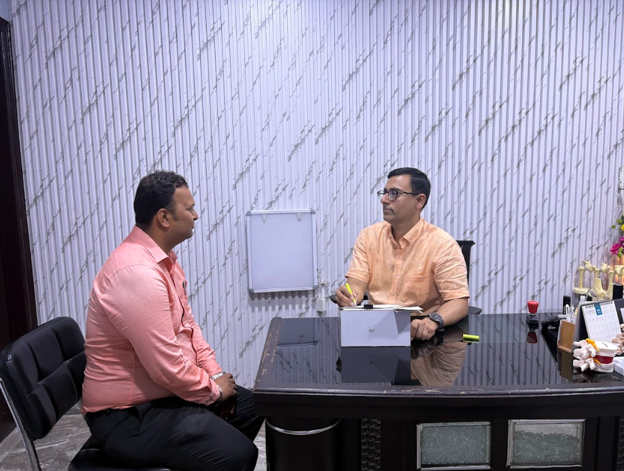
Most back pain isn’t sinister. It settles within a few weeks with rest, posture correction and basic painkillers. The problem is the back pain that doesn’t. Pain that wakes you at night, runs down a leg, gets worse with sitting, or hangs around for more than six weeks needs a proper assessment — not another round of guesswork or one more bottle of muscle-relaxant from the chemist.
At Bone & Joint Clinic in Sector 31, Noida, Dr Sumit Badhwar sees a steady mix of back pain cases — from IT professionals with poor desk posture to drivers, athletes and post-menopausal women with degenerative spine changes. Most leave without needing surgery. The ones who do need it get a clear explanation of why before anything is recommended.
If you’ve been searching for Back Pain Treatment in Noida and want a straight answer about what’s causing your pain and what to actually do about it, the rest of this page covers it.
Back pain has a long list of possible causes, but a handful account for most cases that walk into the clinic:
long hours at a desk, repeated lifting, poor sitting posture. Common in IT professionals and drivers.
bulging or herniated discs pressing on a nerve root. Often the cause when pain shoots down a leg (sciatica).
sudden lifting, sports injuries, awkward twisting movements.
age-related wear of the spine, common after 40.
typically in post-menopausal women and older men, sometimes after only a minor strain.
pain felt in the lower back and buttock region.
the small joints at the back of the spine becoming arthritic.
one vertebra slipping forward over the one below it.
spinal infections including TB spine, inflammatory arthritis, or tumours. Rare, but they have to be ruled out when the pattern of pain doesn't fit a mechanical cause.
Identifying which cause you’re dealing with matters more than the label itself. Treatment for a disc herniation is different from treatment for facet arthritis, even though both can feel like the same back pain from the outside.
Back pain isn’t all the same. The pattern usually tells the story before any imaging does:
that worsens with activity and eases with rest — usually mechanical or muscular.
sometimes with numbness or tingling — typically a disc pressing on a nerve.
needs immediate attention. Don't wait.
that improves with movement — could be inflammatory in origin.
and doesn't ease with rest — needs prompt assessment.
Some back pain you can sit out with rest and over-the-counter painkillers. Some you can’t. See a back pain doctor in Noida sooner rather than later if any of the following apply:
Pain lasts longer than 4 to 6 weeks despite rest and painkillers.
Pain radiates down a leg, especially below the knee.
There's numbness, tingling or weakness in a leg or foot.
You're losing bladder or bowel control — this is an emergency, not a clinic visit. Go to a hospital.
The pain wakes you at night and doesn't settle with position changes.
You've had unexplained weight loss along with the pain.
There's a history of cancer, recent infection or significant injury.
You're over 50 and the back pain is new.
The earlier the serious causes are ruled out, the simpler the treatment plan tends to be. Most patients in this group are reassured within one consultation that surgery isn’t on the table.
Worried your back pain might be more than just a strain? Send any X-rays or MRI reports when you request an appointment with Orthopedic Surgeon in Noida Dr Sumit Badhwar. He reviews imaging before the consultation so the visit isn’t spent on basics.
Here’s the part most patients want to hear first: roughly 80 to 90% of back pain cases at the clinic don’t need surgery. Treatment is matched to the cause, not to the X-ray.
Conservative (non-surgical) options:
Small daily-routine tweaks fix more cases than people expect.
strengthening of core and back muscles, manual therapy, and supervised mobility work.
Short courses of anti-inflammatories or muscle relaxants where appropriate — not as a long-term solution.
facet joint, epidural or nerve root blocks for specific patterns. Part of the broader orthopedic pain management service at the clinic.
Weight reduction, ergonomic setup, regular movement. Boring, but they work.
Surgical options (when conservative care has been genuinely tried, or when imaging shows a clear indication):
The earlier the serious causes are ruled out, the simpler the treatment plan tends to be. Most patients in this group are reassured within one consultation that surgery isn’t on the table.
for stubborn disc herniations causing nerve compression.
surgery for spinal stenosis where walking distance is getting shorter.
for instability or significant spondylolisthesis.
spine surgery where the case allows — smaller incision, less muscle disruption, shorter hospital stay.
One thing worth saying clearly: a bulging disc on MRI in someone without nerve symptoms usually doesn’t need surgery. Symptoms and clinical examination matter more than the picture on the scan. Patients dealing with Back Pain Noida often arrive convinced their MRI report means surgery — usually it doesn’t.
Move every 30 to 45 minutes if you sit for work. Set a timer if you have to.
Lift with your legs, not your back. Keep loads close to the body.
Strength train. Strong core and glute muscles protect the spine. Two sessions a week is enough.
Address early stiffness. Don't wait until it becomes proper pain.
Sleep on a medium-firm mattress, with a pillow under or between the knees.
Maintain a healthy weight. Extra weight around the midsection pulls the lumbar spine forward into a poor position.
Walk daily. 30 minutes is a reasonable target. It's underrated as spine therapy.
Stop smoking. Nicotine reduces blood supply to the discs and accelerates degeneration. There's solid research on this.
Patients who actually do these consistently rarely become surgical cases. It’s not glamorous advice, but it’s the truth.
Picking somewhere to treat back pain is mostly a question of trust — whether you’ll be told the truth about whether you actually need treatment, and whether the person doing it has handled enough back-and-spine cases to know the difference between a slipped disc that needs surgery and one that just needs six weeks of guided rehab. Bone & Joint Clinic, in Sector 31 Noida, is built around that single idea.
A few specifics worth knowing before you book:
Dr Sumit Badhwar has treated back pain across the full range — desk-job mechanical strain in 20-somethings, disc prolapse in middle-aged patients, spinal stenosis and osteoporotic fractures in older adults. The volume matters; pattern recognition only comes from seeing thousands of cases.
Not every back pain needs an MRI, and not every MRI finding needs surgery. A lot of patients walk in expecting a procedure and walk out with a six-week rehab plan, anti-inflammatories and instructions to return if things don't settle. That isn't under-treatment — it's the right answer for most back pain.
Many patients come in from Delhi, Greater Noida, Ghaziabad and beyond. Initial consultations and report reviews can be done remotely so you don't waste a trip if it isn't needed.
The clinic exhausts conservative options — medication, physiotherapy, posture correction, bracing and image-guided pain management — before any surgical conversation. Surgery is offered only when symptoms and imaging both clearly justify it.
Diagnosis, imaging review, physiotherapy, injections and spine surgery (if needed) all happen at the same clinic with the same team. You aren't handed off between three facilities and four receptionists, and your file isn't reconstructed from scratch at every visit.
You don't leave the consultation with a vague verbal instruction. You take home a written plan — medications, exercises, posture corrections, when to follow up, what to watch for — so you (and any family member helping look after you) can refer back to it between visits.
Costs for investigations, physiotherapy packages, injections or surgery are discussed clearly at the consultation. No surprise bills, no add-ons that weren't agreed in advance.
That last point matters more than people expect. For many patients in Noida, surprise pricing is one of the bigger frustrations with private healthcare. Bone & Joint Clinic keeps that conversation clean.
WhatsApp us