Spine Surgery in Noida

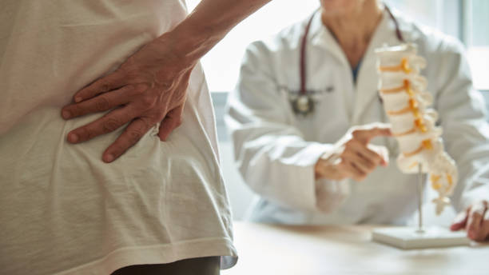
Patient with back pain is examined by a doctor who points to a spine model on the table behind themy.

Persistent back or neck pain can disrupt sleep, mobility, and daily function, and when rest, medication, and physiotherapy no longer help, spine surgery often becomes the right step toward lasting recovery. The spine is one of the most complex structures in the body, making surgical precision non-negotiable and the choice of surgeon critical to outcomes. At Bone & Joint Clinic in Noida, Dr. Sumit Badhwar offers precise diagnosis and advanced surgical care, backed by over 15 years of expertise in orthopaedic and spine treatment.

As a leading spine surgeon in Noida, Dr. Badhwar stands apart through a blend of world-class training and proven results. Trained at King George’s Medical College, Lucknow, and specialised in sports and exercise medicine at Nottingham University, UK.
From advanced minimally invasive procedures to regenerative middle-path options like Stem Cell Therapy and Mosaicplasty, his approach to spine surgery in Noida is rooted in clinical accuracy, complete patient awareness, and zero-compromise care. This commitment to precision and individualised treatment has made him one of the most trusted names for spine and joint health in the city.

Patient with back pain is examined by a doctor who points to a spine model on the table behind themy.

Wondering whether your back problem actually needs surgery? Let’s explore the conditions that often call for surgical care.

What Conditions Require Spine Surgery?

Not every back problem needs an operation, but certain conditions respond best to surgical correction once non-surgical options are exhausted. Common conditions that may require spine surgery include:

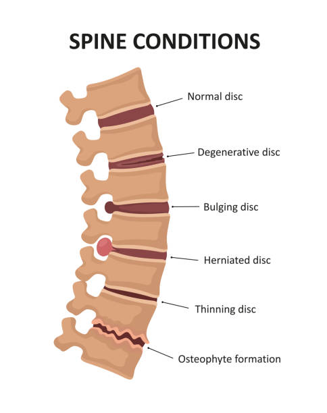
Educational diagram of the spine with labeled conditions: normal disc, degenerative disc, bulging disc, herniated disc, thinning disc, and osteophyte formation

Herniated or slipped discs pressing on nerves

Spinal stenosis (narrowing of the spinal canal)

Degenerative disc disease

Spondylolisthesis (slippage of one vertebra over another)

Spinal deformities such as scoliosis or kyphosis

Spinal fractures from injury or osteoporosis

Spinal tumours or infections

Sciatica that does not improve with conservative care

Educational diagram of the spine with labeled conditions: normal disc, degenerative disc, bulging disc, herniated disc, thinning disc, and osteophyte formation

Struggling with persistent back pain?

Discuss your symptoms with an expert and find out if surgery is right for you.

Not sure if your discomfort is something serious? Let’s dive into the warning signs your spine may be sending you.

Symptoms That May Indicate Spine Problems

Recognising the warning signs early can prevent long-term nerve damage. You should consult a spine specialist if you experience:

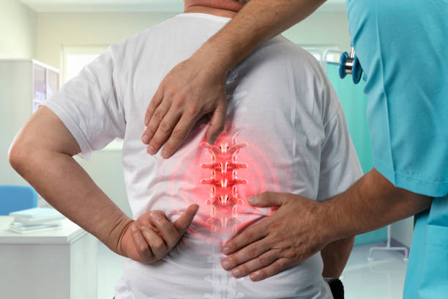
Healthcare provider palpates a patient’s lower back, with a red glow over the lumbar spine to indicate back pain.

Constant or worsening back or neck pain

Pain radiating into the arms, legs, or buttocks

Numbness, tingling, or weakness in the limbs

Difficulty walking or maintaining balance

Stiffness that limits everyday movement

Loss of bladder or bowel control (a medical emergency)

Pain that disturbs sleep or fails to respond to rest and medication

Healthcare provider palpates a patient’s lower back, with a red glow over the lumbar spine to indicate back pain.

What is behind your nagging back pain? Let’s discover the common factors that gradually damage your spine.

Causes of Spine Disorders

Woman sits at a desk, hands on her neck and lower back, showing office-related neck and back tension with a computer and notebook nearby.

Bone & Joint Clinic, our sports injuries treatment covers a wide range of conditions. These are the most common ones we manage:

Natural ageing and wear-and-tear of discs and joints

Poor posture and prolonged desk or screen time

Injuries from accidents, falls, or sports

Obesity placing extra load on the spine

Heavy lifting or repetitive strain

Osteoporosis weakening the vertebrae

Genetic and congenital spinal conditions

Woman sits at a desk, hands on her neck and lower back, showing office-related neck and back tension with a computer and notebook nearby.

How do doctors find the exact source of your pain? Let’s explore the diagnostic tools that make accurate treatment possible.

Diagnosis of Spine Conditions

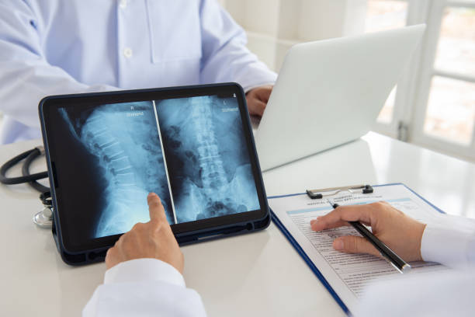
Doctor or clinician points to spine X-ray images on a tablet during a medical consultation, with a clipboard and stethoscope visible on the desk.

Accurate diagnosis is the foundation of successful treatment. Dr. Sumit Badhwar, an eminent orthopedic doctor in Noida, uses a detailed clinical assessment alongside modern imaging to pinpoint the root cause of pain. Diagnostic tools include:

  • Physical and neurological examination
  • X-rays to assess bone alignment and damage
  • MRI scans for soft tissue, discs, and nerves
  • CT scans for detailed bone imaging
  • Nerve conduction studies when nerve involvement is suspected

·        3D imaging to help patients clearly understand their condition

Stop guessing about your back pain.

Get a precise diagnosis from a seasoned specialist.

Worried that surgery means one fixed approach? Let’s discuss the range of options tailored to your needs.

Options Offered for Spine Surgery in Noida at Bone & Joint Clinic

Treatment is always tailored to the patient’s condition, age, and lifestyle. Dr. Badhwar offers a range of surgical options for managing spinal disorders, including:

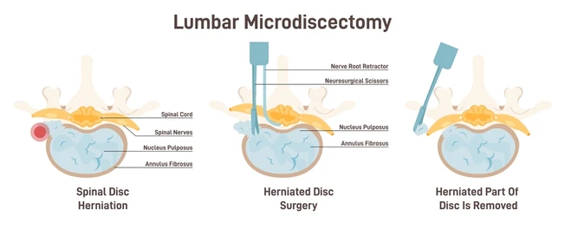
Microdiscectomy:

Three-panel diagram of lumbar microdiscectomy showing spinal disc herniation, herniated-disc surgery, and removal of the herniated portion in each step

This procedure removes the portion of a herniated disc that presses on a spinal nerve. It relieves leg pain and sciatica through a small incision, allowing a quick recovery.

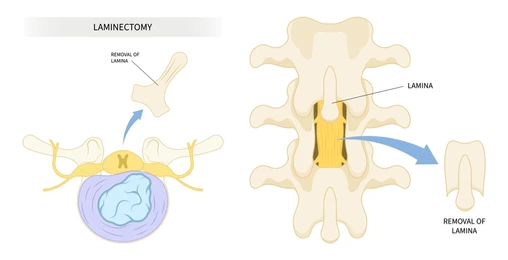
Laminectomy:

Two-panel diagram of a laminectomy: left shows removal of the lamina to access the spinal cord; right shows the vertebral arch after lamina removal exposing the spinal canal.

A small section of bone (the lamina) is removed to ease pressure on the spinal cord and nerves. It is commonly used to treat spinal stenosis and relieve numbness and weakness.

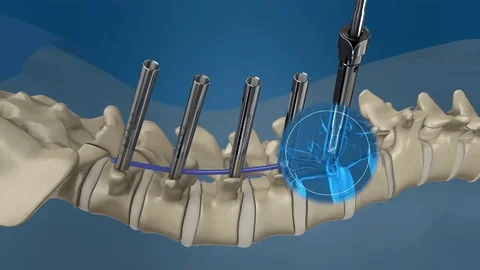
Spinal Fusion:

Dental implant surgery on the lower jaw: multiple titanium implants anchored to the bone with a guide and drill approaching a circular blue marker/abutment site.

Two or more vertebrae are permanently joined to stabilise the spine. This is ideal for slippage, deformity, or instability, reducing pain caused by abnormal movement between bones.

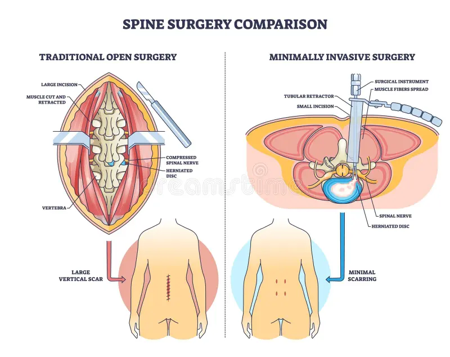
Minimally Invasive Spine Surgery:

Comparison of traditional open spine surgery vs. minimally invasive spine surgery, with labeled cross‑sectional views and patient silhouettes below

Using smaller incisions and specialised tools, this technique reduces muscle damage and blood loss. Patients benefit from less pain, minimal scarring, and a faster return to daily life.

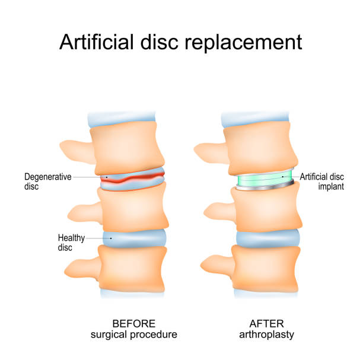
Disc Replacement:

Diagram of artificial disc replacement in the spine: left shows a degenerative disc before surgery; right shows the artificial disc implant after arthroplasty.

A damaged spinal disc is replaced with an artificial one to preserve natural movement. Unlike fusion, it relieves pain while maintaining flexibility in the spine.

What modern spine surgery can really do for you? Let’s explore the benefits that change patients’ lives.

Benefits of Advanced Spine Surgery

Modern spine surgery is safer and more precise than ever, offering patients significant long-term relief. Key benefits include:

Side-by-side profile shots showing slouched posture on the left and upright posture on the right.

Lasting relief from chronic back and nerve pain

Restored mobility and independence

Smaller incisions and reduced scarring with minimally invasive methods

Faster recovery and shorter hospital stays

Improved posture and spinal stability

A return to work, sport, and daily activities

Side-by-side profile shots showing slouched posture on the left and upright posture on the right.

Imagine moving freely again, without pain holding you back.

Begin your recovery journey with an experienced spine specialist.

Seeking a skilled surgeon you can truly trust with your spine? Let’s discover what sets Dr. Sumit Badhwar apart.

Why Choose Bone & Joint Clinic for Spine Surgery in Noida

Choosing the right surgeon makes all the difference to your outcome. As an ace orthopedic surgeon in Noida, Dr. Sumit Badhwar offers a combination of skill, technology, and care that few can match:

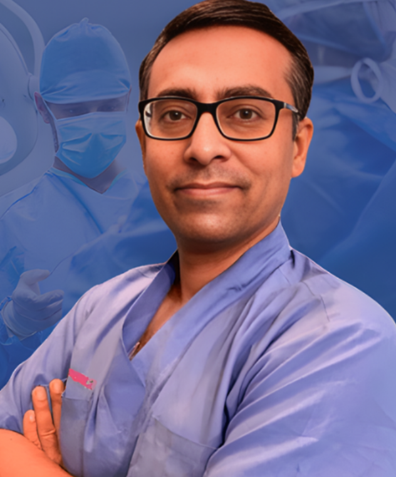
Smiling male surgeon in blue scrubs and glasses, arms crossed, with an operating room team in the blurred background.

15+ Years of Experience:

Over a decade and a half of dedicated orthopaedic and spine surgery practice, delivering consistent and reliable results.

UK-Trained Expertise:

Specialised training in Sports Medicine and Rehabilitation Technology at Nottingham University, UK, combined with world-class surgical skill.

Imported Implants at Affordable Cost:

World-class instruments and imported implants ensure durable outcomes without an unnecessary financial burden.

Tailor-Made Rehabilitation:

Recovery plans are personalised to each patient's lifestyle, ensuring a faster and stronger return to daily life.

Honest, Patient-First Approach:

Every patient receives a transparent assessment and a treatment plan built around their genuine needs, not unnecessary procedures.

Smiling male surgeon in blue scrubs and glasses, arms crossed, with an operating room team in the blurred background.

As a trusted spine doctor in Noida, Dr. Badhwar ensures every patient receives an honest assessment and a treatment plan built around their needs. You can also explore his expertise in joint replacement surgery for related orthopaedic concerns.

FAQs

1. When is spine surgery necessary?

Surgery is usually recommended when persistent pain, nerve compression, or instability does not improve with medication, physiotherapy, and rest.

At Bone & Joint Clinic, a state-of-the-art orthopedic & spine surgery clinic in Noida, Dr. Sumit Badhwar conducts a clinical and neurological exam, reviews imaging, and explains your condition using 3D visuals before suggesting treatment.

Most patients are encouraged to walk within a day or two after surgery, supported by a tailored rehabilitation plan.

It uses smaller incisions and specialised tools, resulting in less pain, reduced scarring, and a faster recovery than traditional open surgery.

Yes. With proper assessment and modern techniques, spine surgery can be performed safely on older patients to restore quality of life.

Disclaimer:

The information shared in this content is for educational purposes and not for promotional use.

Bone & Joint
Clinic Noida
Call Now Button