Skip to content
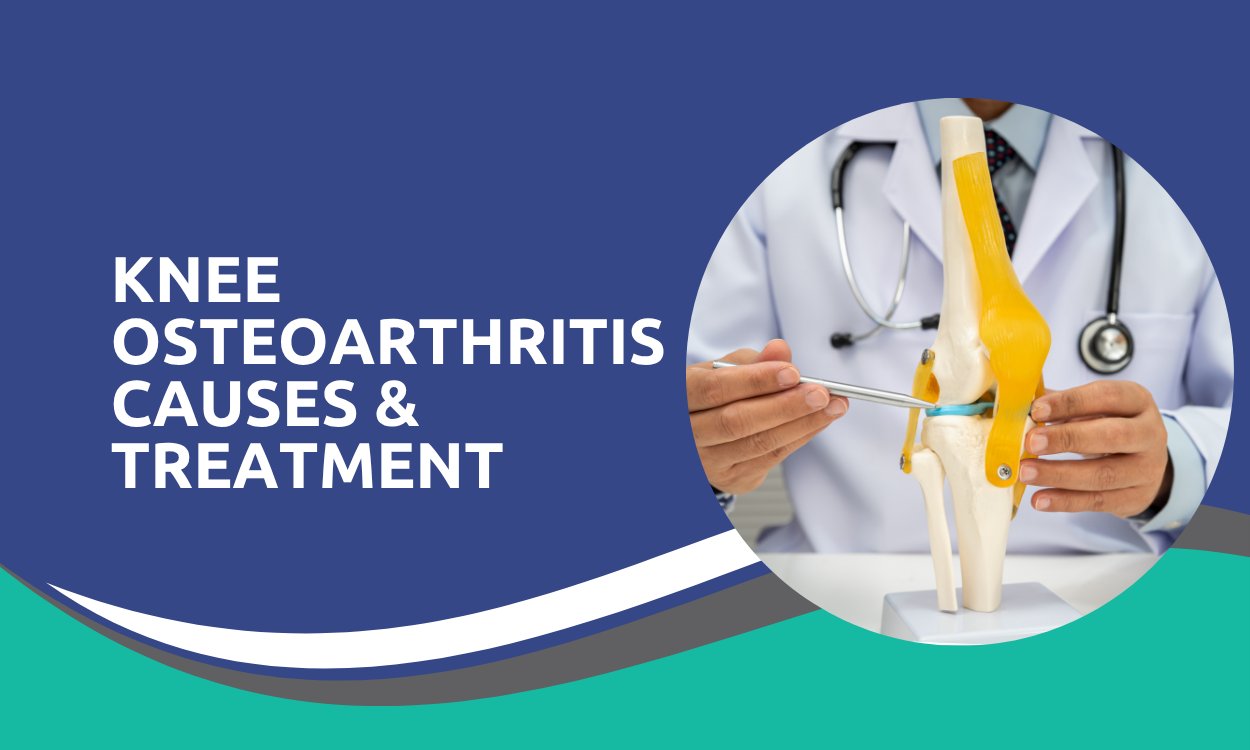
Osteoarthritis of the knee wears down the cartilage cushioning the femur and tibia, exposing bone surfaces to friction with every step. It’s the leading cause of chronic knee pain in adults over 45 and affects women more than men. Treatment spans from physiotherapy and injections in early grades to total knee replacement when cartilage loss becomes too advanced for conservative options to hold.
According to Dr. Sumit Badhwar, best orthopedic surgeon in Noida, “Patients often tolerate knee osteoarthritis for years with over-the-counter painkillers before seeking evaluation, and by that point the cartilage loss has usually progressed well beyond the stage where medications alone can make a meaningful difference.”
Dealing with morning stiffness or a grinding sensation in the knee that hasn’t improved with rest?
Book Appointment
Table of Contents
ToggleHow does osteoarthritis damage the knee joint over time?
The breakdown doesn’t happen overnight, it builds across four clinically defined grades, and each one narrows the window for non-surgical options.
- Grade 1: Minor cartilage softening shows up on MRI but not on plain X-ray, the patient feels occasional discomfort after long walks or prolonged sitting, and most people at this stage dismiss it as normal ageing without ever getting it checked
- Grade 2: X-rays start showing mild joint space narrowing and early bone spur formation along the margins, the knee stiffens up noticeably after rest, and climbing stairs triggers a dull ache that wasn’t there six months ago
- Grade 3: Cartilage has thinned enough that the gap between femur and tibia is visibly reduced on imaging, daily tasks like walking to the market or getting in and out of a car become painful, and the joint may swell up after any sustained activity
- Grade 4: Near-complete cartilage loss with bone grinding directly on bone, significant deformity develops as the leg starts bowing inward or outward, and at this stage the joint is essentially functioning without any biological cushion left
Waiting until grade 4 limits what can be done conservatively. An early clinical assessment for orthopedic pain management catches the damage when there’s still cartilage worth preserving.
What treatment options work for knee osteoarthritis?
The treatment ladder depends entirely on the grade of cartilage loss and how much functional limitation the patient is already experiencing on a daily basis.
- Physiotherapy: Quadriceps and hamstring strengthening exercises redistribute mechanical load across the joint so the damaged cartilage zone doesn’t take all the impact, and a structured 10 to 12 week program under supervision brings measurable relief for grade 1 and 2 patients
- Injections: Viscosupplementation with hyaluronic acid restores some of the lubrication that arthritic joints lose over time, while corticosteroid shots reduce acute inflammation rapidly, both options buying functional months for patients who aren’t surgical candidates yet
- Knee bracing: Offloader braces shift mechanical weight away from the damaged compartment of the knee toward the healthier side, and for patients with single-compartment arthritis this can delay surgery by years if combined with weight management and physio
- Joint replacement: When cartilage is gone and the bone structure has started deforming, total knee replacement remains the only definitive solution, with modern implants lasting 15 to 20 years and allowing patients to return to walking, climbing, and most daily activities within 3 to 6 months
Patients dealing with arthritis-related knee issues often find that the right management approach at the right stage makes the biggest difference, and our guide on managing knee pain effectively covers what works at each phase of the condition.
Why choose Dr. Sumit Badhwar?
Dr. Sumit Badhwar holds an MCh in Orthopaedics with over 16 years of surgical experience, 350+ total knee replacements and 275+ hip replacements with a 100% success rate and zero post-operative infection, UK training in sports medicine from Nottingham University, and that depth of hands-on joint work shows in how accurately the arthritis grade is assessed on the very first visit. What patients consistently mention is that they walked in expecting to be told they need surgery and walked out with a structured non-surgical plan that actually worked, because the decision is always based on what the imaging shows rather than assumptions.
📞 Call Now: +91 99586 11221
FAQs
1)Can osteoarthritis of the knee be reversed?
Lost cartilage doesn’t regenerate, but progression can be slowed significantly.
2) At what grade is knee replacement recommended?
Typically at grade 3 to 4 when conservative measures stop working.
3) Does weight affect knee osteoarthritis?
Every extra kilogram adds roughly 4 kg of load on the knee joint.
4) Is walking good for knee osteoarthritis?
Controlled walking on flat surfaces helps, but stairs and slopes aggravate it.
References:
- Osteoarthritis of the Knee — National Institute of Arthritis and Musculoskeletal and Skin Diseases (NIAMS)
- Management of Knee Osteoarthritis — American Academy of Orthopaedic Surgeons (AAOS)