Skip to content
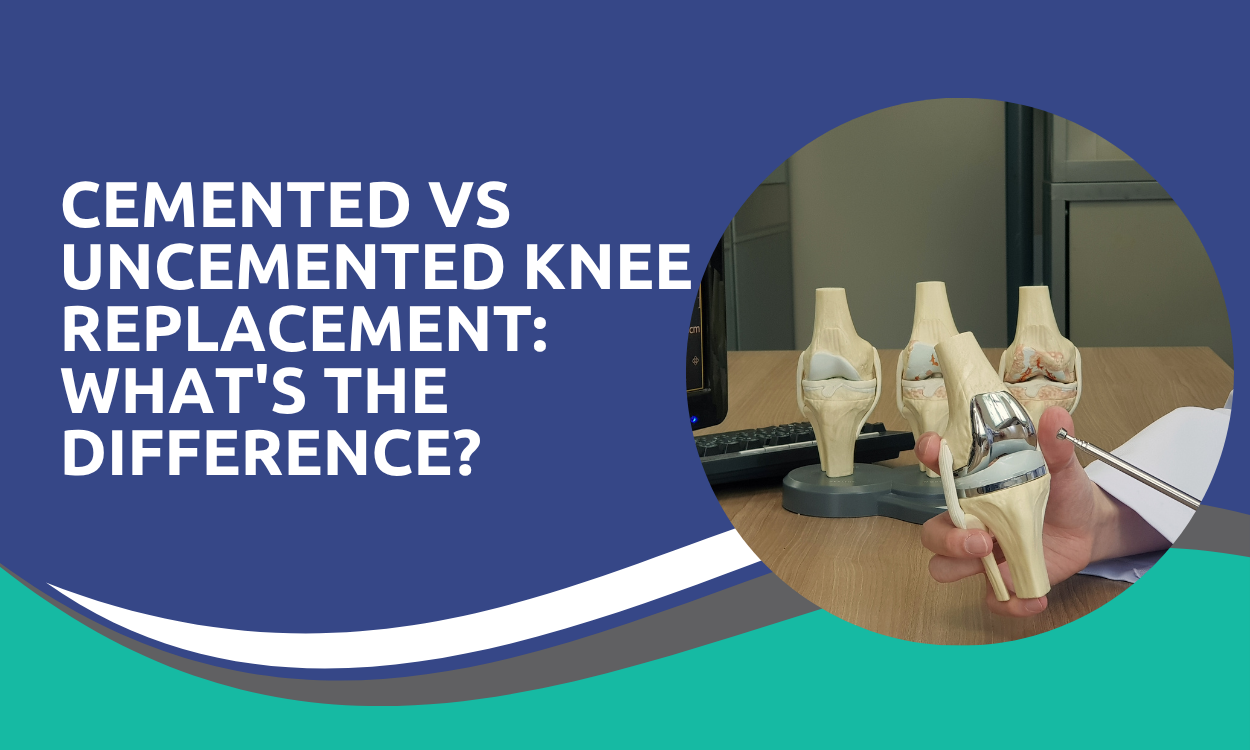
The two techniques differ in how the implant attaches to the bone. Cemented knee replacement uses a fast-setting acrylic bone cement to fix the metal and plastic components directly onto prepared bone surfaces, which provides immediate stability and is the more widely performed approach across age groups. Uncemented knee replacement relies on a specially textured implant surface that allows the patient’s own bone to grow into the prosthetic over several weeks, creating a biological bond instead of a chemical one. Both produce excellent long-term outcomes when matched correctly, and the difference between them usually comes down to bone quality, patient age, and how active the individual is expected to remain after surgery.
According to Dr. Sumit Badhwar, Best Orthopedic Surgeon in Noida, “the question of cemented versus uncemented gets debated far more in journals than it does in clinic, because once you’ve examined the patient and reviewed their imaging, the right technique tends to be obvious within minutes.”
Unsure which knee implant technique suits your case? Book Appointment
| Factor | Cemented Knee | Uncemented Knee |
| Fixation method | Bone cement adhesive | Bone growth integration |
| Initial stability | Immediate full weight bearing | Gradual bone ingrowth needed |
| Ideal patient age | Above sixty years | Below sixty, active |
| Implant lifespan | Twenty to twenty five years | Potentially longer term |
Table of Contents
Toggle
Why is cemented knee replacement still the most common choice?
The cemented technique has decades of clinical data behind it, and the predictability of outcomes is the main reason it remains the default for most surgeons worldwide.
- The bond between implant and bone forms within minutes of cement application, which means patients can begin walking with support within twenty four hours of surgery without waiting for biological healing to take over.
- It works reliably in older patients with reduced bone density, since the cement compensates for weaker bone by providing an immediate mechanical lock that doesn’t depend on the body’s healing capacity.
- Long-term outcomes are extremely well documented, with multiple studies tracking cemented knee implants for over two decades and showing consistent performance across patient demographics and surgical settings.
- Revision surgery, if ever needed, is more straightforward because the cement layer can be removed cleanly and the bone underneath generally remains intact enough to support a new prosthetic.
These advantages explain why cemented techniques dominate national joint registries even today. For a broader view of how the overall procedure is performed, the knee replacement page covers the full surgical approach.
When does an uncemented knee replacement become the better option?
The uncemented approach is selected less frequently, but for the right patient profile it offers advantages that cemented fixation cannot replicate over the very long term.
- Younger patients under sixty with strong, dense bone are the typical candidates, because their bone is biologically capable of growing into the textured implant surface and forming a permanent natural bond.
- Patients expected to remain highly active over the coming decades benefit from biological fixation, since there is no cement layer that could potentially loosen under repeated high-impact loading over twenty or thirty years.
- Future revision tends to preserve more native bone given that no cement removal is involved, which keeps surgical options open for patients likely to need a second procedure later in life.
- The procedure itself requires precise bone preparation and surgeon experience, because the implant must sit in firm contact with healthy bone to allow ingrowth, and any gap can compromise long-term stability.
In practice, the technique is chosen based on imaging and patient profile rather than blanket preference, and most active younger patients respond well to it. For more on what recovery typically looks like afterwards, the recovery guide walks through what to expect.
Why Choose Dr. Sumit Badhwar ?
Dr. Sumit Badhwar brings over twenty years of orthopedic practice and more than 2000 joint replacement procedures completed across knee, hip, and shoulder. His practice uses both cemented and uncemented techniques, and the choice is made based on bone density imaging and the patient’s expected activity level rather than a default approach to every case.
The reason long-term outcomes hold up is that the technique is matched to the patient before surgery is scheduled, not adapted in theatre when problems show up. Zero infections across all joint replacements performed, and every patient is shown their imaging and walked through why a particular approach has been chosen. The right implant for the patient outperforms the popular implant every time.
Call +91 9958611221 to book your consultation.
Frequently Asked Questions
Is uncemented knee replacement more painful initially?
Recovery pain is similar, though weight bearing may be restricted slightly longer.
Can the same surgery use both techniques?
Yes, hybrid fixation is used in select cases combining both methods.
Does cemented mean the implant will loosen sooner?
Modern cemented implants routinely last twenty plus years in most patients.
How is the choice between techniques made?
Through bone density imaging, patient age, and expected long-term activity level.