Skip to content
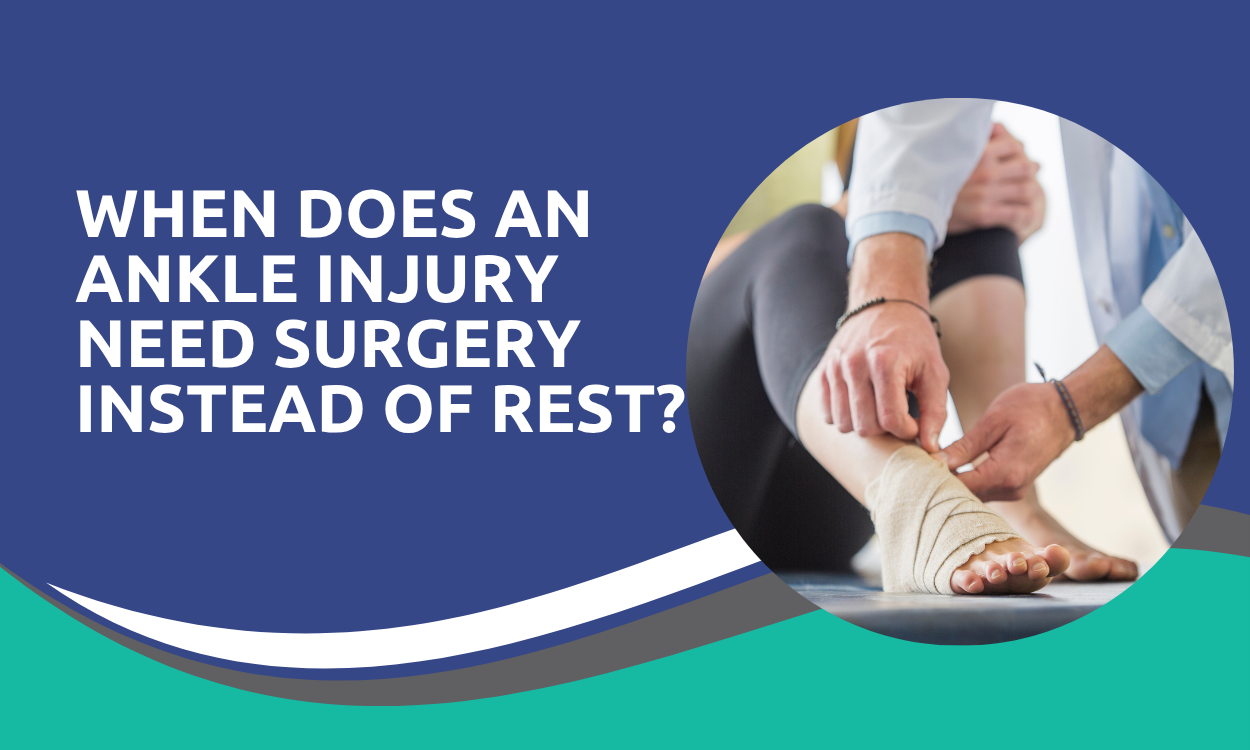
Most ankle injuries don’t need surgery. Rest, ice, and physiotherapy clear up the majority of sprains and stable fractures within weeks. Surgery enters the picture when bone ends have shifted, a ligament has snapped completely, or the joint stays wobbly long after conservative care should have settled it. Which path you’re on depends on the injury type, how bad it is, and the way your ankle answers early treatment, and imaging usually confirms the rest.
According to Dr. Sumit Badhwar, Best Orthopedic Surgeon in Noida, “Plenty of ankles that look alarming on day one settle beautifully with rest, but a joint that stays unstable after weeks of care is telling you something rest alone won’t fix.”
Table of Contents
Toggle
Which Ankle Injuries Usually Heal With Rest?
Quite a few ankle injuries recover fully without an operation, as long as they’re handled sensibly from day one.
Mild sprains. These are the everyday ones, and a few weeks of rest is normally all the stretched ligament needs to knit back together.
Stable fractures heal in a cast or boot whenever the broken ends have stayed in line. No screws, no theatre.
Minor ligament strains do well with physiotherapy, where controlled movement slowly rebuilds whatever strength the injury took away.
Swelling and bruising. Dramatic to look at, sure, yet it usually points to soft tissue rather than anything structural, and it calms with time.
Rushing the process tends to backfire. Get an early read from a sports injury doctor and you’ll know quickly whether rest is really doing the job.
When Does Surgery Become the Right Call?
Other injuries won’t knit on their own, and stretching out conservative care just wastes time while the joint takes a beating.
Displaced fractures are the obvious one. When the bone ends drift apart, plates or screws bring them back into line so they heal straight.
A complete ligament tear sometimes needs reconstructing, especially once the ankle starts giving way and refuses to hold under everyday load.
Persistent instability. Months of physio behind you and the ankle still buckles? That points to structural damage no amount of rest will reach.
Joint surface damage from a nasty break may need surgical repair, because leaving it tends to invite arthritis a few years on.
Step in at the right moment and you protect the joint for the long haul. For anyone active, this piece on sports injuries covers the line between a minor tweak and something a specialist should see.
Why Choose Dr. Sumit Badhwar for Ankle Surgery ?
Dr. Sumit Badhwar has spent more than 20 years in orthopedics and handled over 2000 joint procedures, each with a 100% success rate and no infections. Conservative care gets pushed as far as it reasonably can before surgery ever enters the conversation.
There was a young trekker whose knee a local doctor had written off entirely, and after a tailored programme he returned to full activity with his strength back. Rest earns its fair shot first, and the operating theatre waits until the ankle genuinely calls for it.
Call +91 8104310753 to book your consultation.
Frequently Asked Questions
Can a torn ankle ligament heal without surgery?
Partial tears often heal with physiotherapy, but complete tears with instability may need surgical repair.
How long should I rest an ankle injury before worrying?
If there’s no improvement after two to three weeks, get it assessed by a specialist.
How do I know if my ankle fracture needs surgery?
Displaced or unstable fractures usually need surgery, while aligned breaks often heal in a cast.
Is ankle surgery recovery long?
Recovery varies by injury, though most patients regain function within a few months with physiotherapy.