Skip to content

Musculoskeletal problems such as back pain are widespread among many people and are associated with mobility problems, posture issues and daily activity limitations. Although occasional pain may appear because of muscle strain, improper posture, sitting for a long time or overloading, sometimes it may be a sign of some other diseases that relate to the spine, discs, nerves, and joints. It is important to identify the indicators to avoid complications and achieve the best results.
According to Dr. Sumeet Badhwar, an eminent orthopedic doctor in Noida, “To relieve back pain, it is important to determine the causes of discomfort. It will allow us to design a unique program and concentrate on mobility improvement and reduction of pain.”
Being an experienced specialist in treating musculoskeletal disorders, Dr. Sumeet Badhwar offers highly effective back pain treatment in Noida at Bone & Joint Clinic. He works with evidence-based approach that includes accurate diagnosis and an individualized treatment program.
Table of Contents
ToggleWhen Is Back Pain More Than Just a Muscle Strain?
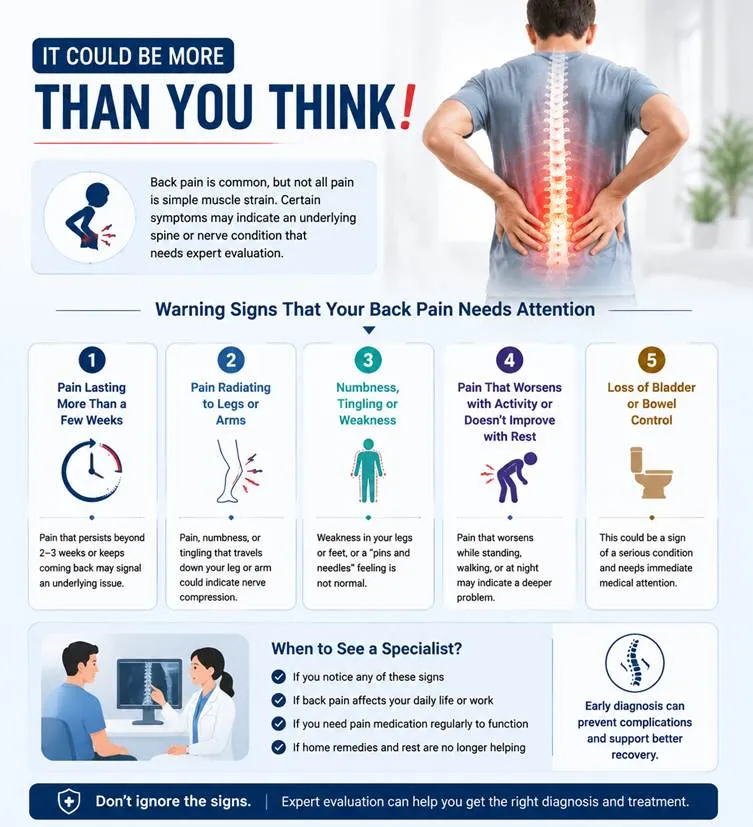
Back pain is often linked to muscle strain, but certain symptoms may indicate deeper issues involving the spine, nerves, or joints. Recognizing these warning signs can help you seek timely care and prevent further complications.
Understanding when back pain requires expert attention is an important step toward better recovery. Early evaluation and appropriate treatment can help restore mobility and support long-term spine health.
Are you neglecting your frequent back pain? Let’s explore the signs that it is time to consult a professional.
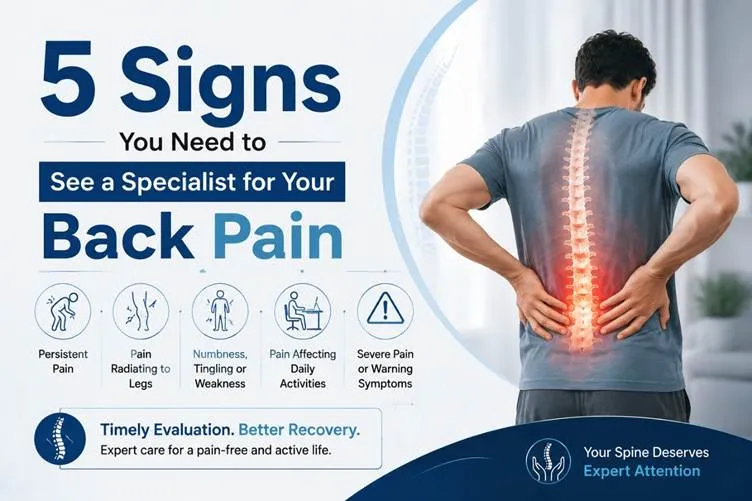
5 Reasons Why You Need to See a Doctor for Back Pain
There can be different reasons for developing back pain; some of them may not be a big problem but others can be quite severe. Some signs cannot be overlooked since they affect movement or cause other discomfort.
Here are 5 reasons why consulting a professional may be necessary:
1. Your Back Pain Does Not Go Away
Minor cases of back pain usually heal with time and some lifestyle changes. However, persistent pain which lasts for several weeks or comes frequently needs a detailed examination. The reasons for developing pain may be problems with discs, joint degeneration, or spine. With professional consultation, you can understand the reason and get appropriate treatment options. Postponing the examination may lead to the development of certain diseases that can influence your mobility in the future.2. Pain Moves from Your Back into Your Leg
Back pain associated with pain spreading to your buttock, thigh, or leg is indicative of possible nerve damage. Conditions like sciatica or irritation due to disk damage can be common causes of such pain. You can have: * Pain that moves rapidly and feels like burning * Pain that worsens when you are seated or standing * Pain traveling past the knees * Difficulties in executing normal functions A detailed evaluation helps determine whether the symptoms are related to spinal nerves or other musculoskeletal causes.3. You Have Numbness, Tingling, or Weakness
Numbness, tingling, or weakness in the back, legs, or feet may indicate pressure or irritation affecting spinal nerves. These symptoms often require careful assessment to understand the severity of nerve involvement. Having weakness while walking or lifting your foot requires a specialist consultation.4. Your Back Pain Is Affecting Sleep or Daily Activities
Back pain that affects sleep, work, exercise, or simple daily activities can significantly reduce quality of life. Difficulty sitting for long periods, bending, walking, or completing regular tasks may indicate that the condition requires professional care. A specialist can assess your symptoms and recommend suitable treatment options, including medication, physiotherapy, lifestyle modifications, or advanced procedures when needed.5. Your Back Pain Is Accompanied by Warning Symptoms
Certain symptoms alongside back pain may indicate a more serious concern. These include: Sudden loss of bladder or bowel control Unexplained weight loss Fever with severe back pain Pain following a major accident or injury Severe pain that worsens at night Progressive weakness in the legs These symptoms require timely medical assessment to identify the underlying cause and begin appropriate care.Want to understand what may be behind ongoing back discomfort? Let’s explore common conditions linked with chronic back pain.
What Conditions Can Cause Persistent Back Pain?
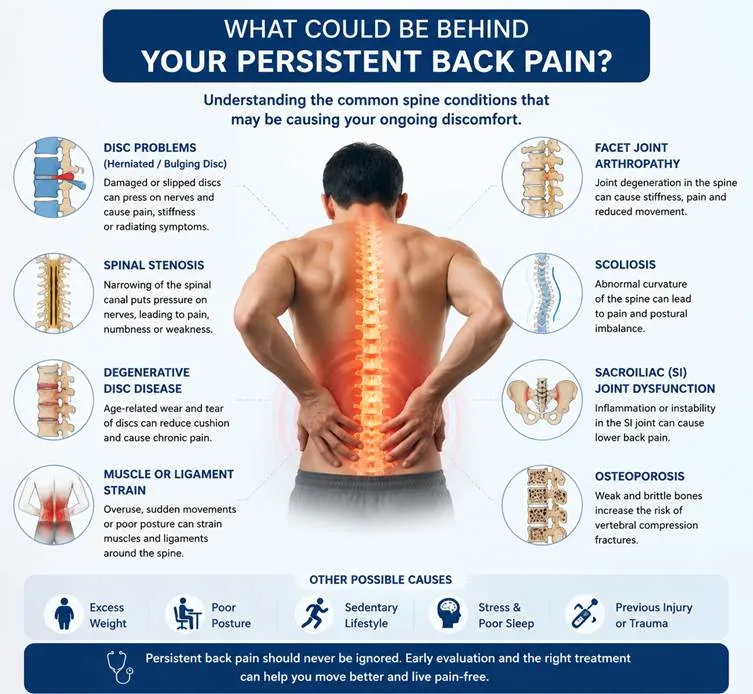
There are a number of possible reasons for persistent back pain other than just straining the muscles. Knowing about the conditions which influence the spine will help determine the right course of action.
The first step towards successfully treating the back pain is finding its cause. Early diagnosis and appropriate treatment can help maintain spine mobility and health.
Looking for ways to protect your spine health? Let’s explore simple steps that help reduce back pain risks.
How Can You Prevent Back Pain From Getting Worse?
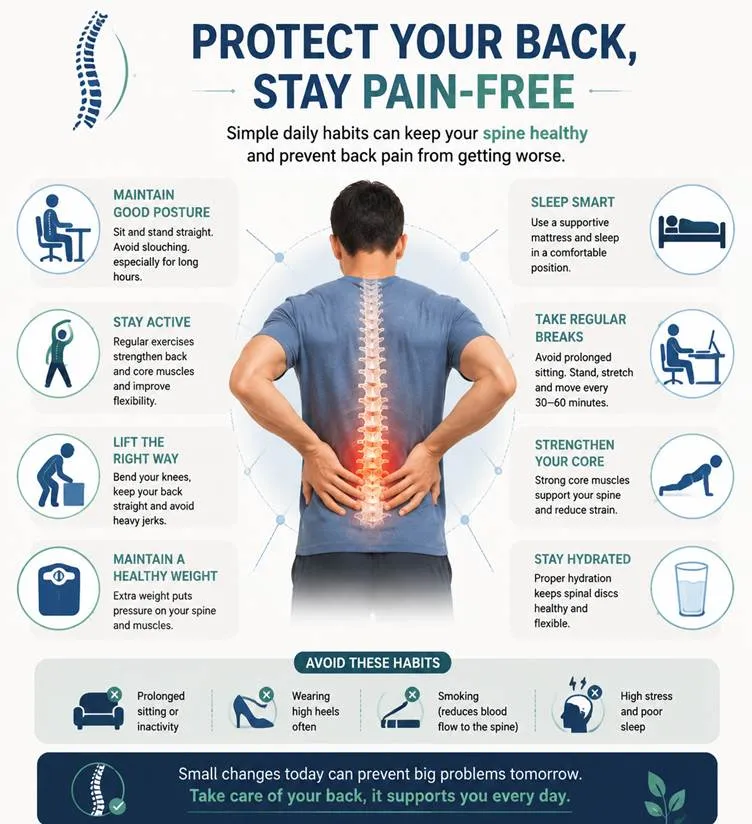
Healthy routines are quite useful in protecting your spine from getting damaged and causing more back pain. It is easy to make certain adjustments in order to achieve this goal.
Preventing problems with the spine today can help avoid pain in the future.
Conclusion
Back pain can range from temporary discomfort to a sign of an underlying spinal condition. Recognizing warning signs such as persistent pain, leg symptoms, numbness, weakness, or difficulty performing daily activities can help in seeking timely care.
Dr. Sumit Badhwar, a highly regarded orthopedic surgeon in Noida, provides expert evaluation and treatment for musculoskeletal conditions with a patient-focused approach. With proper diagnosis and personalized care, many causes of back pain can be effectively managed to improve mobility and quality of life.
FAQs
1. Under what circumstances should I visit an expert for my back pain problem?
2. Is there any chance that my back pain may be indicative of a severe illness?
3. What doctor specializes in back pain?
4. Will physiotherapy help me with my back pain problem?
5. Can my slipped disc be healed without surgical intervention?
Reference Links:
- American Academy of Orthopaedic Surgeons:
https://orthoinfo.aaos.org/en/diseases–conditions/low-back-pain/ - National Institute of Neurological Disorders and Stroke:
https://www.ninds.nih.gov/health-information/disorders/low-back-pain
Disclaimer: The information shared in this content is for educational purposes and not for promotional use.