Dr Sumit Badhwar's

Bone & Joint Clinic

NOIDA,

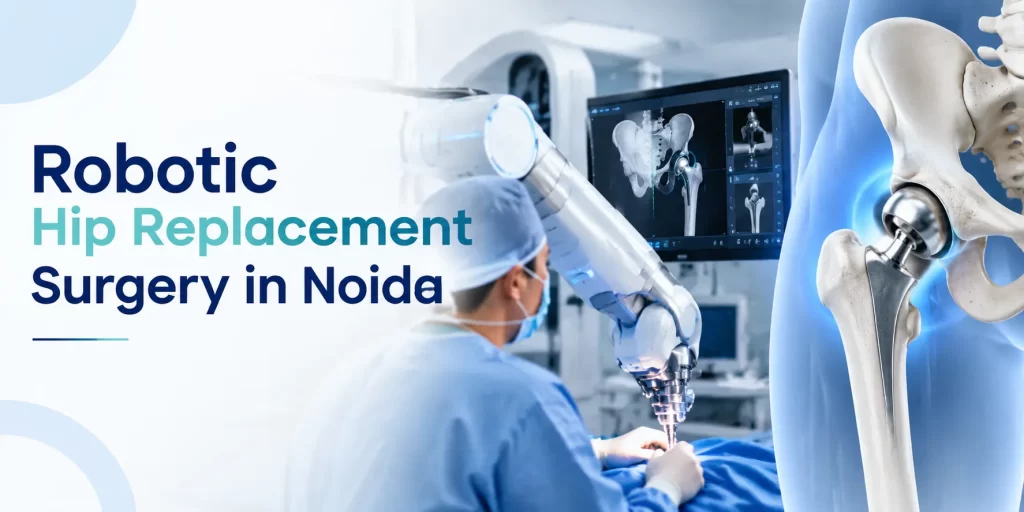
Robotic Hip Replacement Surgery in Noida

The hip joint plays a key role in supporting body weight and enabling smooth movements such as walking, bending, and standing. Damage to this joint due to advanced arthritis, injury, or other conditions can gradually limit mobility and affect daily comfort. Modern advancements in joint replacement have introduced robotic-assisted techniques that help surgeons achieve greater accuracy during hip replacement procedures.

Dr. Sumit Badhwar, a well-known orthopaedic surgeon in Noida, explains, “Every patient’s hip condition is different, so treatment planning should focus on individual joint structure, movement requirements, and recovery expectations. Robotic assistance helps enhance precision while supporting a personalized surgical approach.”

At Bone & Joint Clinic, Dr. Sumit Badhwar provides robotic hip replacement surgery in Noida using advanced surgical planning and evidence-based techniques. With expertise in joint replacement procedures, he focuses on restoring hip function, improving mobility, and helping patients return to their daily activities with confidence.

Want to understand how robotic technology is used in hip replacement? Let’s explore how this advanced approach supports precise joint restoration

What Is Robotic Hip Replacement Surgery?

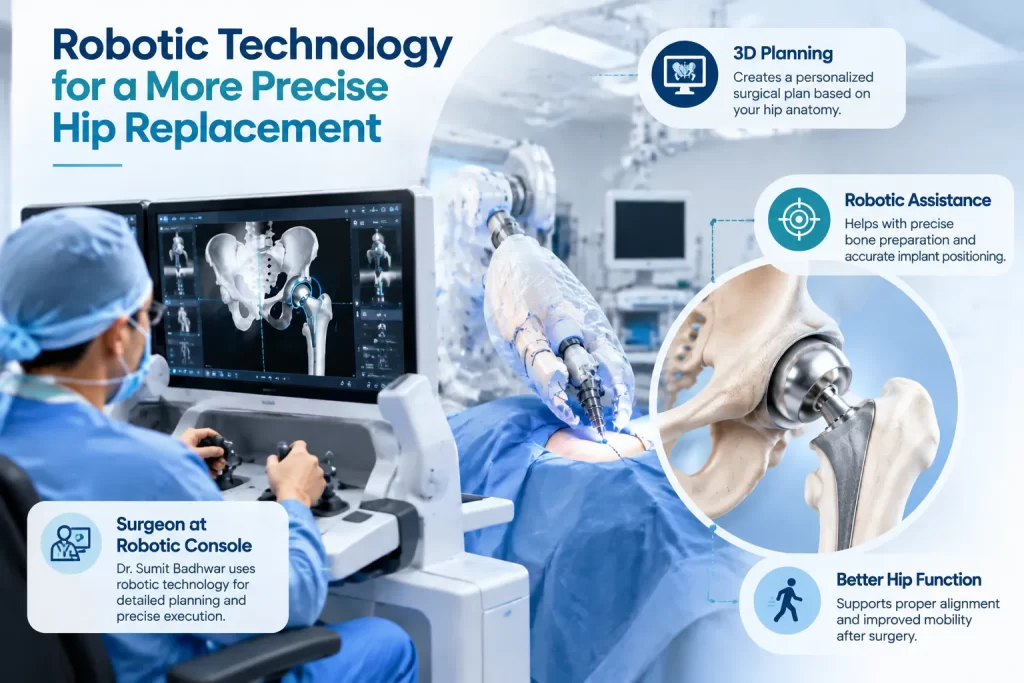
Robotic hip replacement surgery is a cutting-edge medical process. It involves the use of robotic technology to assist the surgeon in the process of performing the surgery. In this regard, it should be noted that the robot itself does not carry out the surgery; rather, it assists the surgeon in surgical planning, precise bone preparation and accurate implant placement.

Before surgery, advanced imaging and computer-assisted planning provide comprehensive knowledge about the patient’s hip structure and help plan the procedure based on the patient’s anatomical and joint needs.

During the procedure, the surgeon precisely prepares the joint and places the implant with robotic assistance. The surgery is performed via carefully planned incisions according to the condition of the patient.

How Does Robotic Hip Replacement Surgery Work?

Robotic hip replacement involves detailed planning and execution to ensure accurate implant positioning. The robotic system works as a supportive tool while the surgeon remains in complete control of the procedure.

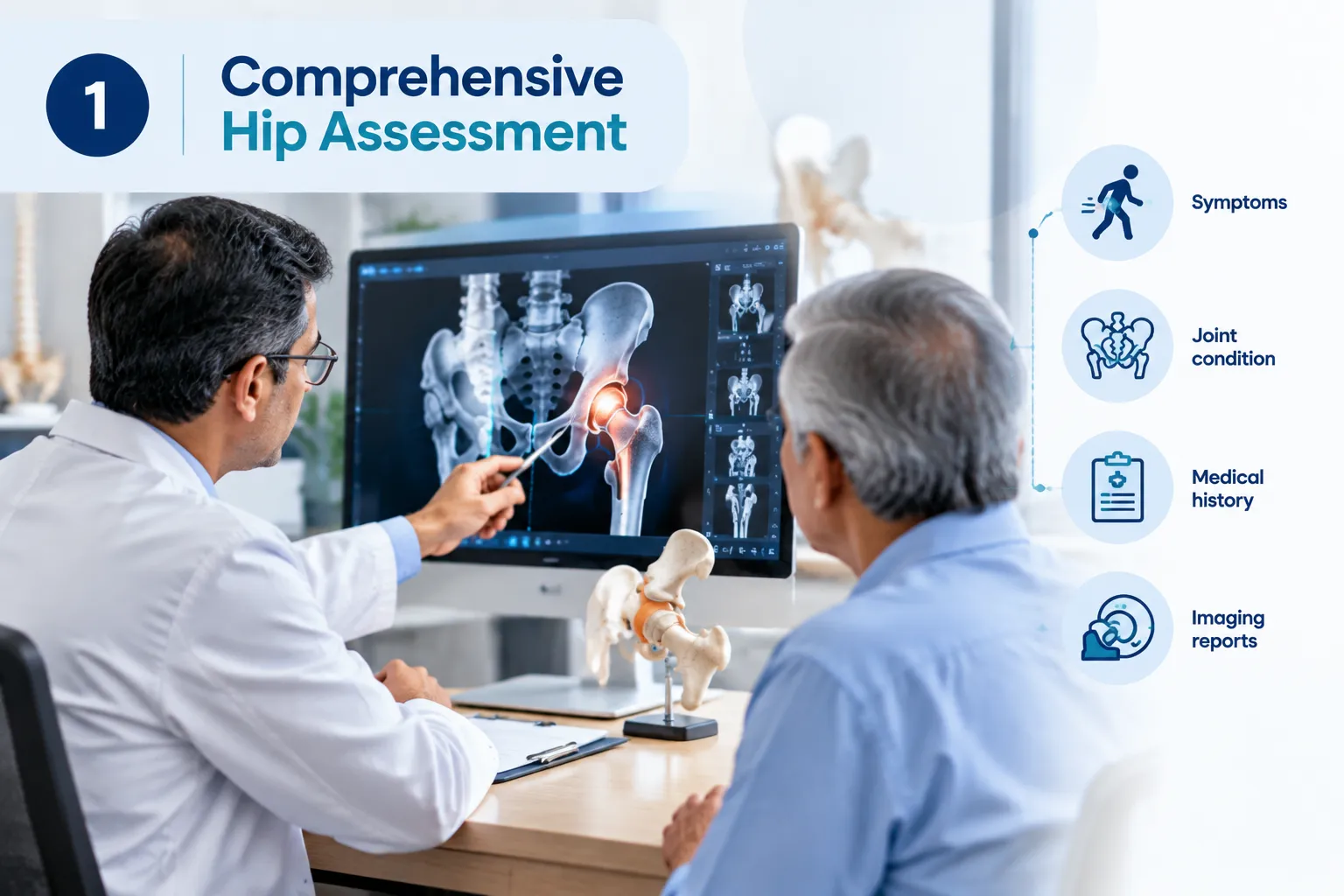
1. Detailed Hip Evaluation

The process begins with a detailed assessment of the hip condition, including symptoms, joint damage, movement patterns, medical history, and imaging reports. This helps Dr. Sumit Badhwar plan the most suitable treatment approach.

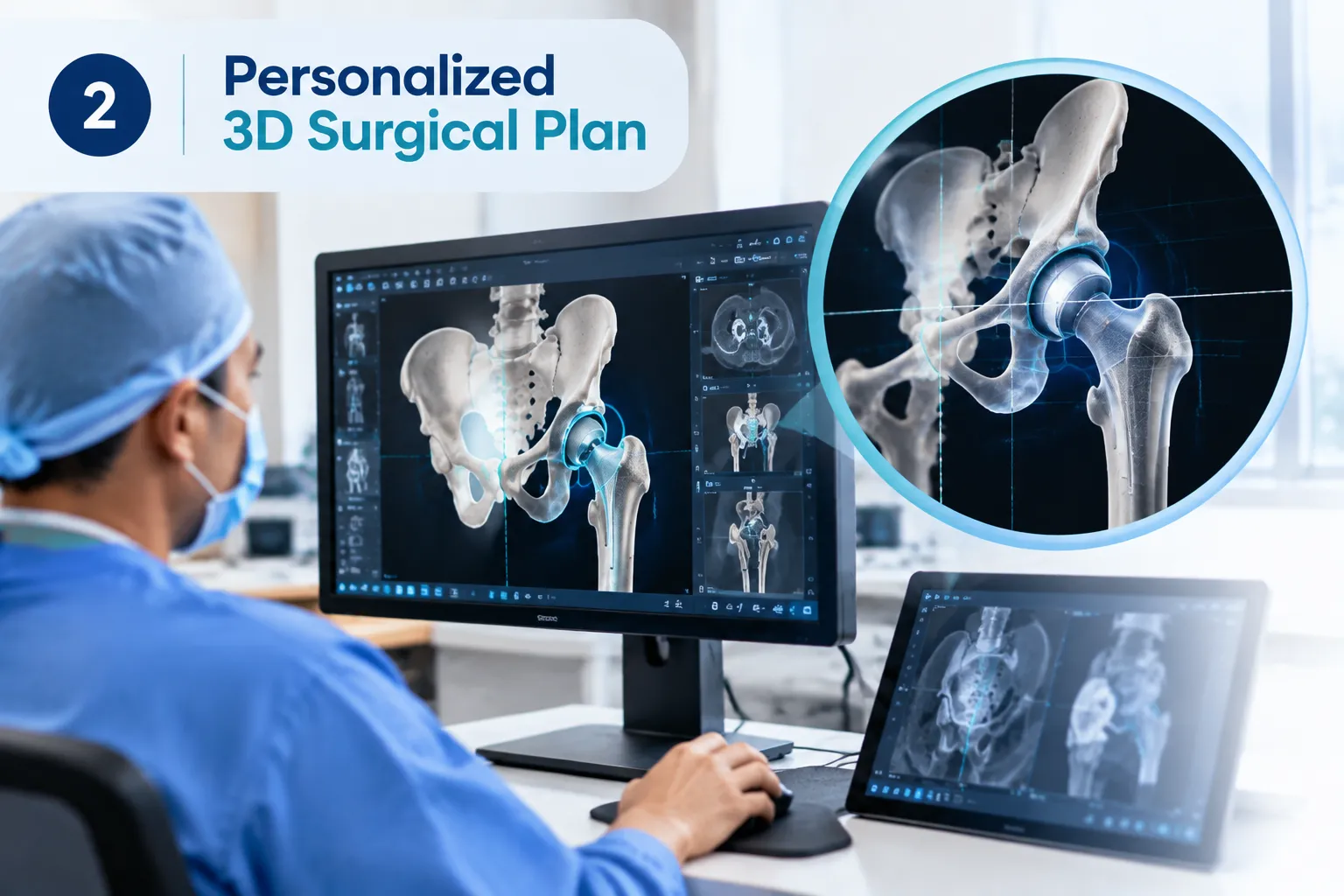
2. 3D Surgical Planning

Advanced imaging and computer-assisted planning create a detailed understanding of the patient’s hip structure. This allows the procedure to be planned according to the patient’s anatomy, alignment, and implant requirements.

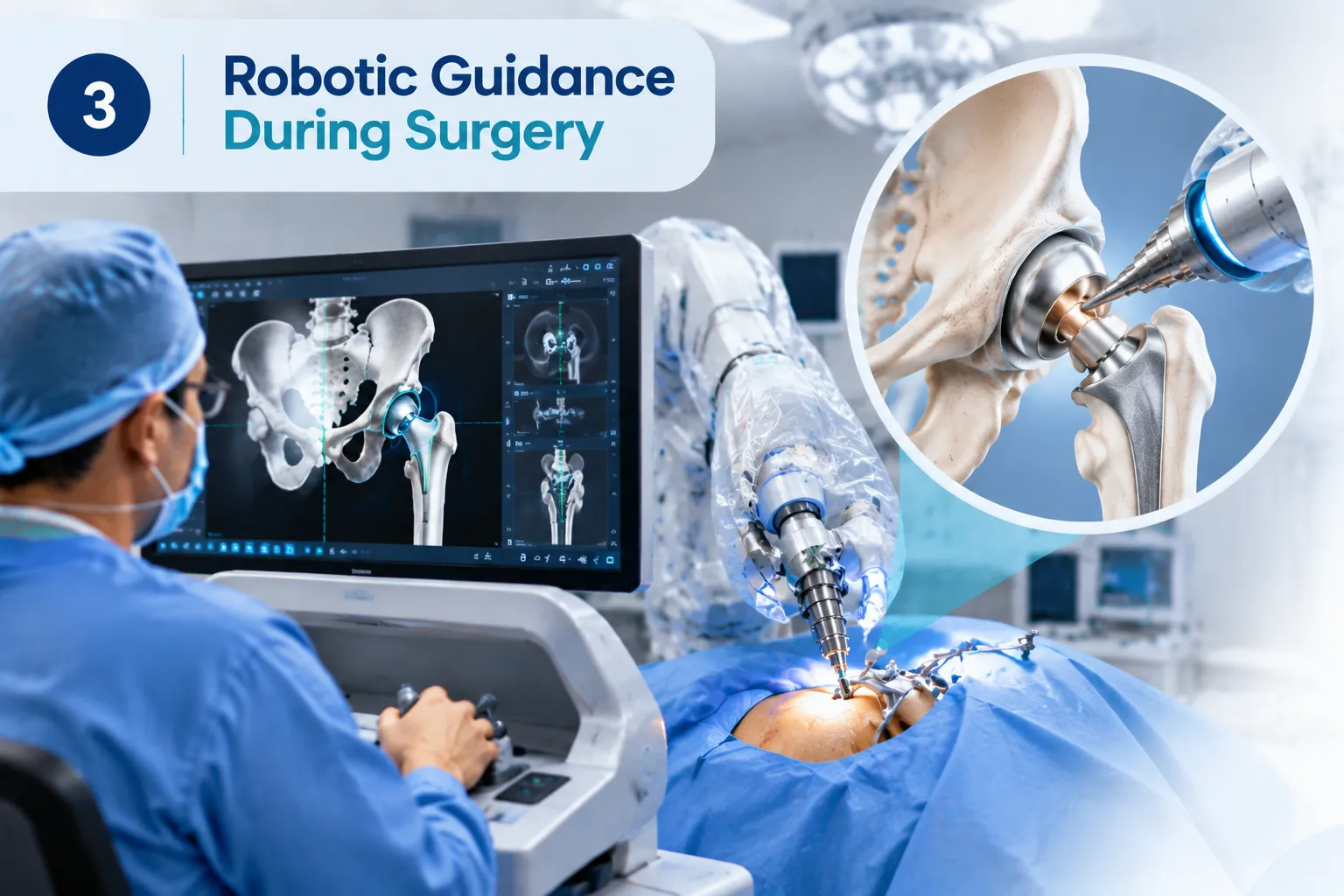
3. Robotic-Assisted Procedure

During robotic surgery in Noida, robotic guidance assists Dr. Sumit Badhwar in performing precise bone preparation and accurate implant placement while maintaining control of the procedure.

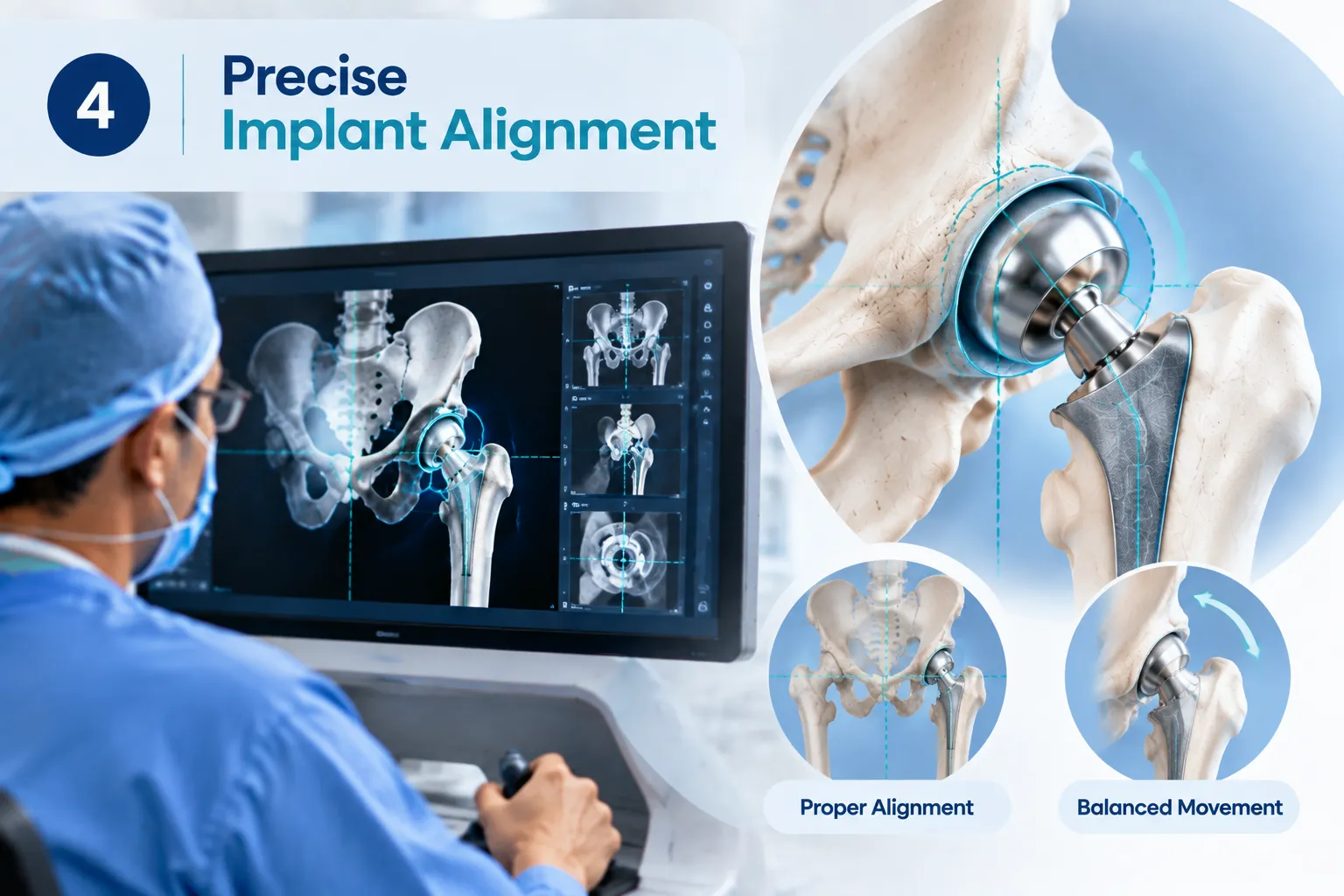
4. Implant Positioning and Joint Balance

The surgeon focuses on achieving proper implant alignment and joint balance to support smooth hip movement and stability after surgery.

5. Rehabilitation Support

After hip replacement surgery in Noida, a structured rehabilitation program helps patients regain strength, flexibility, and confidence while walking.

With robotic assistance and expert surgical care, Dr. Sumit Badhwar focuses on achieving precise treatment planning and supporting better hip function after replacement surgery.

Considering hip replacement for improved mobility? Connect with an orthopedic professional to understand suitable treatment options based on your condition.

What advantages does robotic assistance offer during hip replacement? Let’s look at the key benefits of this advanced approach

Benefits of Robotic Hip Replacement Surgery

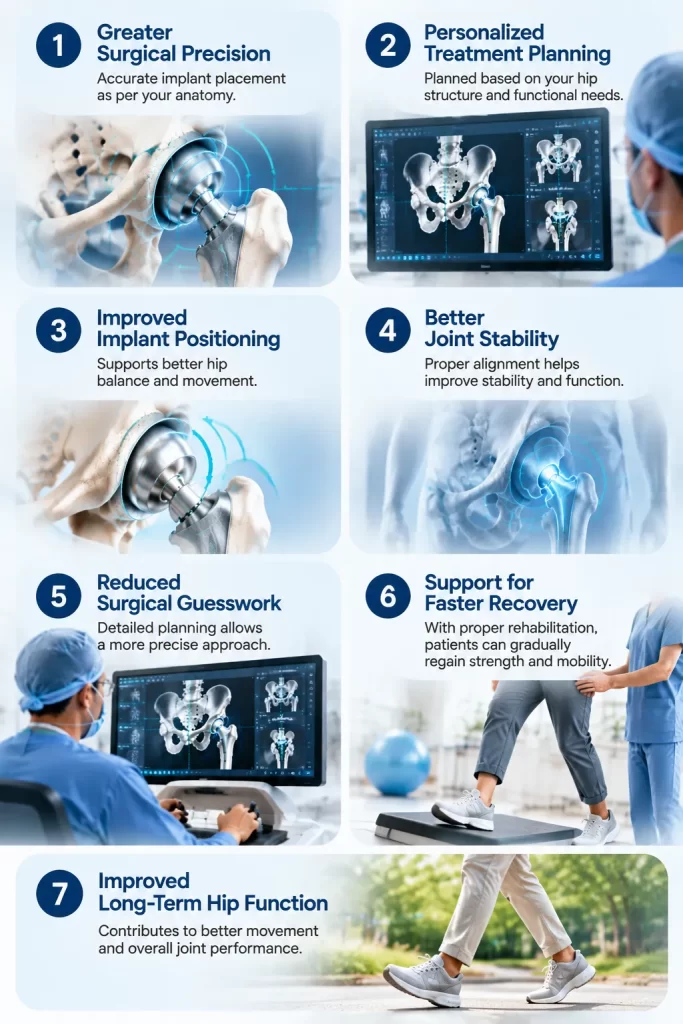
Robotic hip replacement offers several benefits, including:

Robotic and traditional hip replacement follow different surgical approaches. Let’s compare how they differ in planning, precision, and implant positioning

Robotic Hip Replacement Surgery vs Traditional Hip Replacement

Both procedures aim to restore hip function and reduce pain. The table below highlights the key differences between robotic and traditional hip replacement approaches.

Robotic Hip Replacement Surgery

Traditional Hip Replacement

Uses computer-assisted planning and robotic guidance.

Uses conventional surgical planning methods.

Allows detailed pre-operative planning based on hip anatomy.

Planning is based on standard surgical techniques.

Helps improve accuracy of implant positioning.

Implant placement depends on conventional measurements and surgeon expertise.

Provides real-time assistance during surgery.

Surgeon performs the procedure using standard instruments.

Offers a customized approach for individual patient anatomy.

Follows established surgical protocols.

The most suitable approach depends on the patient’s hip condition, overall health and the surgeon’s evaluation.

Which hip conditions may require replacement? Let’s explore the common problems treated with this procedure.

Conditions Treated With Robotic Hip Replacement Surgery

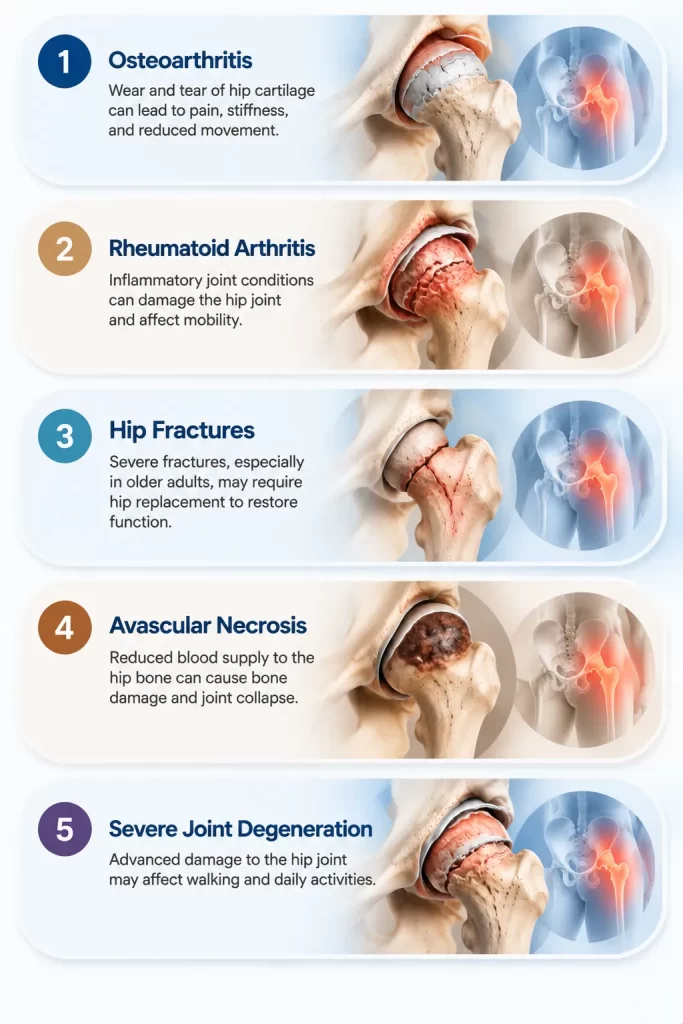
Robotic hip replacement may be considered for patients with advanced joint damage caused by:

Persistent hip pain can affect your independence and mobility. Get in touch with an orthopedic specialist to understand the available treatment options.

What recovery looks like after surgery? Let’s understand the general healing process

Recovery After Robotic Hip Replacement Surgery

Recovery after robotic hip replacement depends on factors such as age, overall health, activity level, and rehabilitation progress.

Early Movement

Patients are encouraged to begin movement and walking with support as advised by the medical team.

Physiotherapy

A structured rehabilitation program helps improve: Hip strength, Balance, Flexibility, Walking ability

Long-Term Care

Maintaining a healthy lifestyle and following rehabilitation advice helps support the function of the replaced hip.

Gradual Return to Activities

Most patients gradually return to daily activities as their strength and mobility improve.

Want to know why patients choose Dr. Sumit Badhwar for robotic hip replacement? Let’s explore his experience, expertise, and advanced approach to hip care

Why Choose Robotic Hip Replacement Surgery in Noida?

20+ Years of Orthopedic Experience

Dr. Sumit Badhwar has extensive experience in orthopedic surgery, joint replacement, and management of complex hip conditions.

Expertise in Joint Replacement Procedures

With specialized experience in hip and knee replacement surgeries, Dr. Badhwar focuses on treatment plans based on each patient’s joint condition and mobility needs.

300+ Joint Replacement Procedures

Dr. Sumit Badhwar has performed more than 300 joint replacement procedures, focusing on precision, safety, and functional recovery.

Advanced Robotic-Assisted Planning

Robotic technology supports detailed surgical planning and helps keep implant positioning accurate.

Personalized Treatment Approach

Every patient goes through a detailed evaluation, so the treatment strategy fits their anatomy, lifestyle, and recovery goals — not a template.

Focus on Accurate Implant Positioning

Proper implant alignment plays an important role in hip stability and movement. Robotic assistance helps support precision during surgery.

Structured Recovery Support

A guided rehab plan helps patients rebuild strength and mobility, then ease back into daily life.

Evidence-Based Orthopedic Care

Dr. Badhwar follows a systematic approach combining clinical evaluation, advanced techniques, and rehabilitation support.

FAQs

1. Is robotic hip replacement better than traditional hip replacement?

Robotic technology helps improve surgical planning and implant positioning. The suitable approach depends on the patient’s condition.

It may be recommended for patients with severe arthritis, joint damage, fractures, or conditions affecting hip movement.

It varies from patient to patient — how well rehab is followed plays a major role in regaining strength and movement.

The lifespan of an implant depends on factors such as activity level, implant type, and overall care.

The cost depends on implant selection, medical requirements, surgical planning, surgeon’s expertise, and hospital facilities.

Disclaimer:

The information shared in this content is for educational purposes and not for promotional use.

Call Now Button