Skip to content
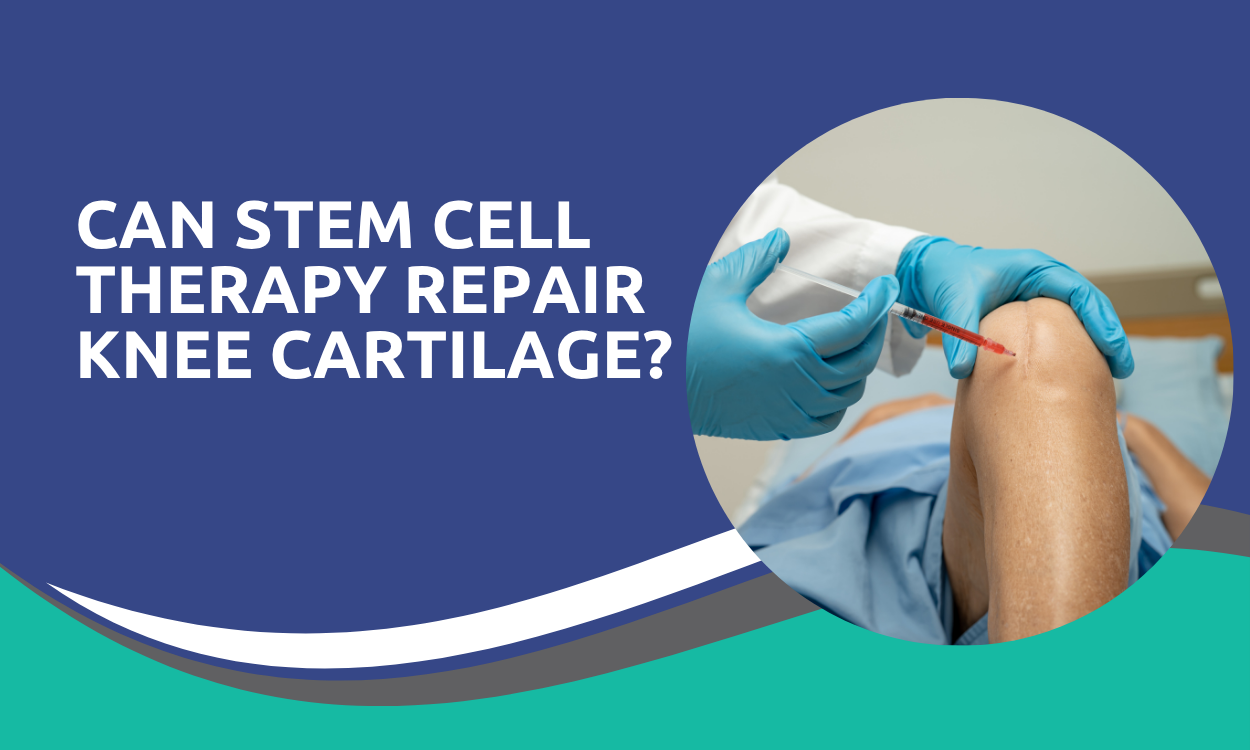
Stem cell therapy can support cartilage healing in the knee, though it doesn’t rebuild a fully worn-out joint. Injected cells stimulate the body’s own repair process and slow further damage, which works best in early or moderate cartilage loss. The treatment suits younger patients with arthritis who aren’t yet ready for joint replacement. Results depend on the stage of damage, the cell source, and how the knee is looked after afterward.
According to Dr. Sumit Badhwar, Best Orthopedic Surgeon in Noida, “Stem cell therapy isn’t a miracle and it isn’t snake oil either, it’s a tool that works wonderfully in the right knee at the right stage, which is why patient selection matters more than the injection itself.”
Considering stem cell therapy before committing to surgery? Book Appointment
Table of Contents
ToggleHow Does Stem Cell Therapy Help Knee Cartilage?
The idea is straightforward, though what’s happening inside the joint after the injection takes a while to play out.
Cell injection. Cells drawn from your own bone marrow or fat are concentrated and delivered straight into the knee where the damage sits.
Repair signals get switched on by those cells, prompting the surrounding cartilage and tissue to start mending in ways it wouldn’t on its own.
Inflammation drops. Most patients feel the pain ease within weeks, and that easing alone changes how the joint loads and moves.
Slowed damage is the longer game, with the therapy helping hold back the wear that arthritis would otherwise keep grinding through.
It’s a real option, not a cure-all. A proper orthopedic pain management plan weighs whether it actually fits your knee before going ahead.
Who Is Stem Cell Therapy Best Suited For?
Not every knee benefits equally, and a good surgeon will be honest about whether the procedure is worth your time and money.
Early arthritis responds best, because there’s still enough cartilage left for the cells to work with and protect.
Younger patients tend to gain most, particularly those who want to delay or sidestep a full replacement for years yet.
Active people. Anyone keen to keep running, hiking, or playing sport often finds stem cell therapy a sensible middle path.
Mild to moderate damage is the sweet spot, since severe bone-on-bone arthritis simply doesn’t leave the cells enough to repair.
Knowing the limits keeps expectations honest. For a closer look at how this works in practice, this guide on stem one treatment walks through what a single injection can actually achieve.
Why Choose Dr. Sumit Badhwar for Stem Cell Therapy for Knee Cartilage?
Dr. Sumit Badhwar has spent more than 20 years in orthopedics and handled over 2000 joint procedures, each with a 100% success rate and no infections. Stem cell therapy is offered only when the knee genuinely fits the profile, never as a way to delay surgery a patient clearly needs.
One patient came in dreading knee replacement at a young age, and a single stem cell injection gave them years of pain-free movement instead. Honest assessment comes first, and the right treatment follows from there.
Call +91 8104310753 to book your consultation.
FAQ’s
Does stem cell therapy actually regrow cartilage?
It supports healing and slows damage, though it doesn’t fully regrow a worn-out joint.
Is stem cell therapy painful?
No, the injection is well tolerated and most patients return to normal activity the same day.
How long do the results of stem cell therapy last?
Results vary, with many patients enjoying pain relief and improved function for several years.
Can stem cell therapy replace knee surgery?
In early arthritis, yes, but advanced damage usually still needs joint replacement.
Disclaimer:
This blog is intended for educational purposes only and should not be considered medical advice.
For accurate diagnosis and treatment, please consult a certified orthopedic doctor.