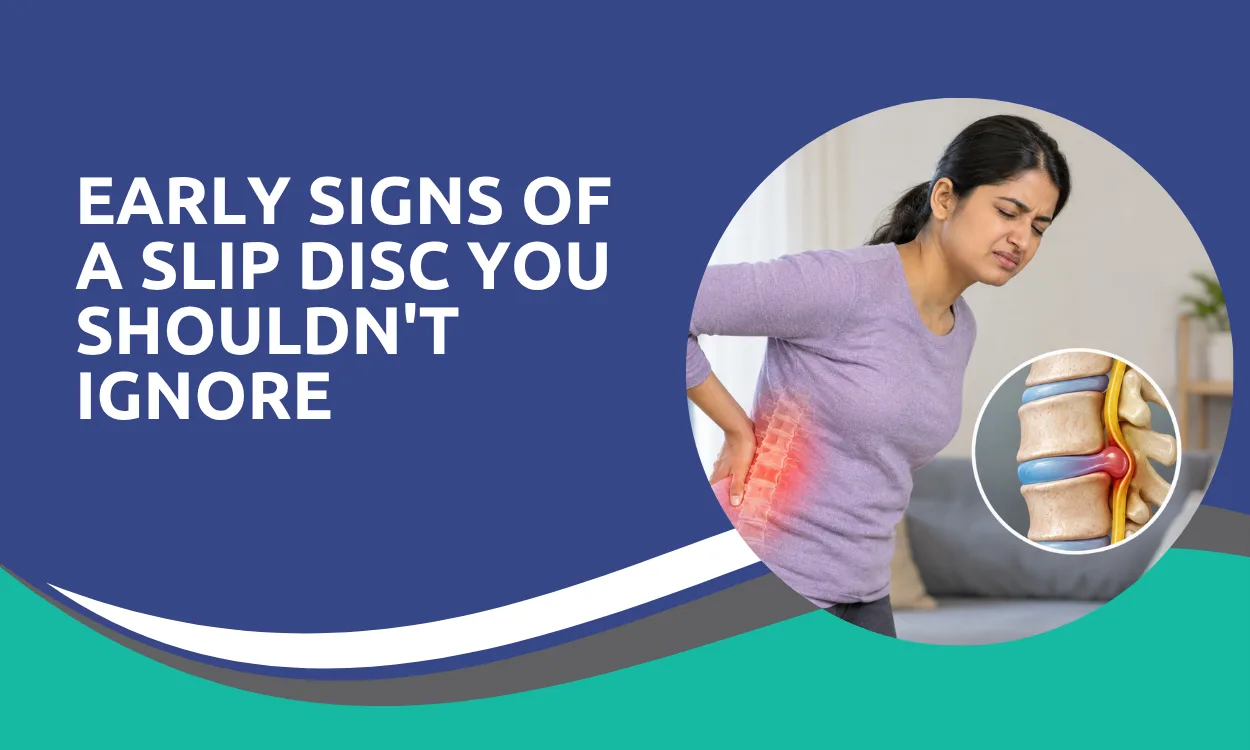
A slipped disc, also called a herniated or bulging disc, happens when one of the rubbery cushions between your vertebrae slips out of place. If that displaced disc presses on a nearby spinal nerve, the body starts sending clear warnings. Lower back pain tends to arrive first. Then comes the tingling, or a hot, shooting ache down one leg. Funny thing, most people blame the mattress. But the signs of slip disc rarely come from a bad night’s sleep.
According to Dr. Sumit Badhwar, one of the Best Orthopedic Surgeon in Noida, “Most patients tell me the same story. A backache they ignored, then leg pain, then a foot that felt strangely heavy. By that stage a nerve is involved. Don’t wait for it to get worse.”
Table of Contents
ToggleWhat Are the Early Signs of a Slip Disc?
The signs of slip disc shift with the disc’s location. But a few patterns show up again and again.
- Radiating Leg Pain: Sharp or burning pain, starting in the lower back and running through the buttock into one leg. That’s sciatica.
- Numbness and Tingling: Pins and needles in the foot or leg, usually just one side. Neck discs do this to the arm and hand instead.
- Muscle Weakness: A dragging foot. Knees that buckle on stairs. A grip that’s lost its strength. It creeps in quietly.
- Pain Triggers: Sitting for long, bending forward, a cough, a sneeze. Lying on your back with knees bent usually brings relief.
Symptoms that stay needs a proper exam, not another week of guessing. Our back pain treatmen plans start with finding which nerve is actually being pressured.
How Is a Slip Disc Confirmed and Treated?
Surgery isn’t the usual answer. Getting the first steps right is.
- Confirming It: Your doctor tests strength and reflexes, then does a straight leg raise. An MRI gives the final answer, though it’s normally reserved for symptoms lasting beyond six weeks.
- Healing on Its Own: Often, yes. Roughly 85 to 90% of acute cases ease within 6 to 12 weeks. That’s the reassuring part.
- Bed Rest: A day or two is fine. Longer stretches tend to slow recovery. Staying gently active usually serves recovery better.
- Natural Care: Heat or ice, short walks, and core strengthening once the pain calms down. Skip heavy lifting and sharp twists for now.
Not sure if it’s time to stop waiting? Our back pain specialist guide lists the warning signs that shouldn’t be ignored.
Why Choose Dr. Sumit Badhwar for Slip Disc Treatment?
Dr. Sumit Badhwar holds an MBBS and MS in Orthopedics and has spent over 20 years treating spine and joint problems in Noida. For a slip disc, he works out which nerve is affected through examination and MRI, then begins with physiotherapy and medication. Surgery comes up only if those fall short. The clinic’s in house physiotherapy team starts mobility and core work early, so recovery keeps moving.
FAQ’s
How do you get a slipped disc back in place?
You can’t force it back. Treatment relieves nerve pressure while the disc settles.
How can a slip disc be cured naturally?
Heat, short walks, and core exercises help. Lingering symptoms still need a doctor.
When is a slip disc an emergency?
Losing bladder or bowel control, or numbness around the groin, needs urgent care.
Does a slip disc always need surgery?
No. Most cases improve with medication, physiotherapy, and time. Surgery comes last.
References:
- National Center for Biotechnology Information (NCBI Bookshelf): Disk Herniation (StatPearls)
- National Center for Biotechnology Information (NCBI Bookshelf): Lumbar Disc Herniation (StatPearls)
Disclaimer: This blog is for educational purposes only. See an orthopedic doctor if back pain spreads to your leg or persists.