Skip to content
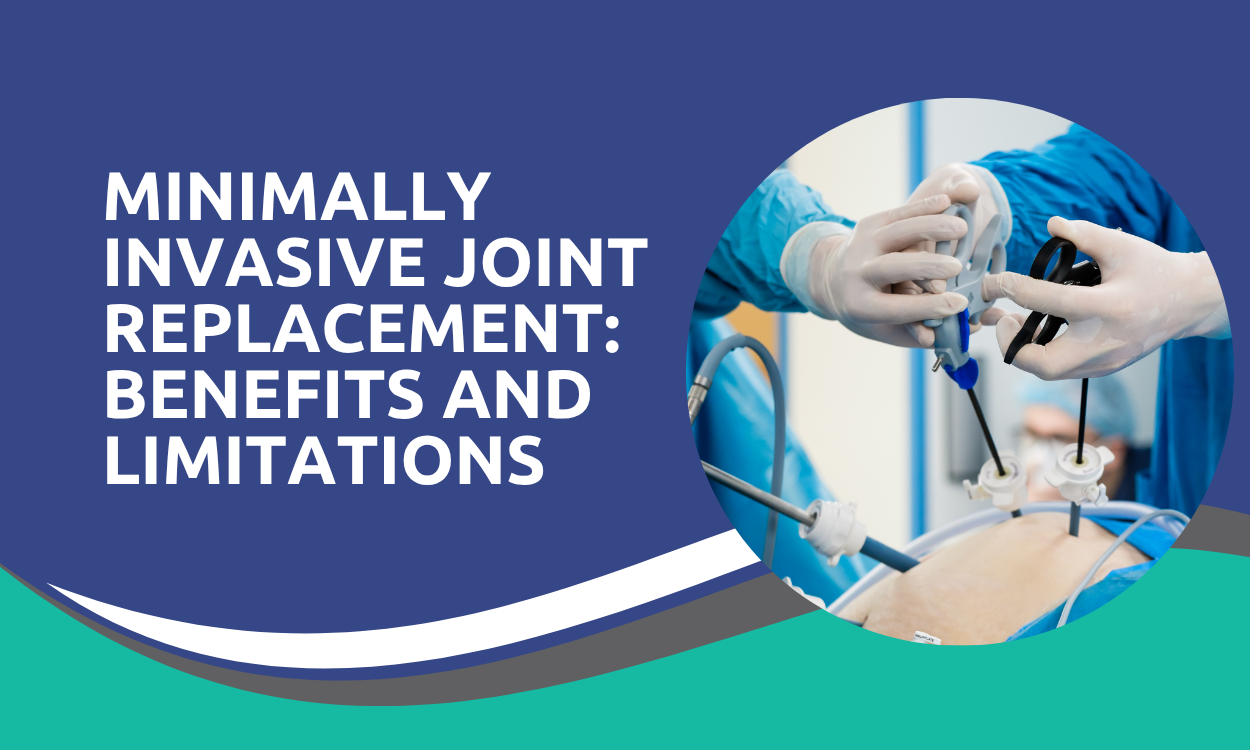
Minimally invasive joint replacement replaces a damaged knee or hip through smaller incisions than traditional open surgery. It spares more muscle and soft tissue, which usually means less pain and a quicker return to walking. The trade-off is that it isn’t suitable for everyone, and it demands a surgeon with specific experience. Candidate selection matters as much as the technique itself.
According to Dr. Sumit Badhwar, Best Orthopedic Surgeon in Noida, “Smaller cuts are wonderful when the patient is right for them, but forcing the technique onto the wrong hip just to keep the scar short does nobody any favours.”
Table of Contents
ToggleWhat Are the Benefits of Minimally Invasive Surgery?
The appeal isn’t just a smaller scar, it’s what the smaller approach does to the recovery underneath.
Less tissue damage is the real prize here, because sparing the muscle around the joint means the body has far less to repair once the implant is in.
Quicker recovery tends to follow naturally, with many patients standing and taking guided steps within a day or two rather than waiting it out.
Reduced blood loss comes with the territory when incisions stay small, which can make the whole procedure gentler on older patients especially.
Smaller scars matter to plenty of people, and while it’s the most visible benefit, it’s honestly the least important one medically.
None of that happens by accident though. It leans entirely on a well-planned knee replacement carried out by someone who does these routinely.
What Are the Limitations You Should Know?
For all its upside, the technique comes with real constraints that an honest surgeon will raise before you book anything.
Not for everyone is the blunt truth, since severe deformity, heavy build, or complex arthritis can rule the smaller approach out completely.
Limited visibility is the surgeon’s challenge, as working through a narrow window leaves less room to see and correct than an open field would.
Surgeon experience becomes non-negotiable, because the learning curve is steep and outcomes drop sharply in less practised hands.
Longer operating time can occasionally be the cost of that precision, particularly in trickier cases where shortcuts simply aren’t safe.
Knowing the limits helps you set fair expectations. If you want the fuller picture on bouncing back, this guide on knee replacement recovery walks through the real timeline.
Why Choose Dr. Sumit Badhwar for Minimally invasive joint replacement ?
Dr. Sumit Badhwar has spent more than 20 years in orthopedics and completed over 2000 joint procedures, each with a 100% success rate and no infections. He’ll only recommend the minimally invasive route when your anatomy genuinely supports it.
One patient walked in barely able to climb stairs and was back to daily life within weeks, the smaller incision making those early days noticeably easier. The technique serves the patient, never the other way around.
Call +91 8104310753 to book your consultation.
Frequently Asked Questions
Is minimally invasive joint replacement safe?
Yes, it’s safe in suitable candidates when performed by an experienced joint replacement surgeon.
Is recovery really faster with smaller incisions?
For the right patient, yes, many walk within a day or two under guidance.
Can anyone get minimally invasive surgery?
No, severe deformity or complex arthritis can make the traditional approach the safer choice.
Does a smaller scar mean a better outcome?
Not necessarily, the internal technique and surgeon experience matter far more than scar size.