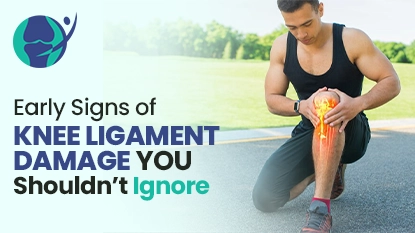
One of the most prevalent complaints among people of all ages is knee pain. Your knees are essential for sustaining body weight, facilitating mobility, and maintaining balance, regardless of whether you are an athlete, fitness fanatic, or someone who leads a normal life. However, ligament damage is one of the most often disregarded reasons for chronic knee problems.
Strong bands of tissue called knee ligaments hold the bones together and keep the joint stable. Your quality of life can be greatly impacted by damage to these ligaments, whether it be from sports injuries, accidents, or abrupt awkward movements. Early detection of knee ligament damage is essential for prompt diagnosis and treatment to avoid more problems.
Orthopedic surgeons in Noida, such as Dr. Sumit Badhwar, who is renowned for his proficiency in joint and ligament care, emphasises the significance of paying attention to knee discomfort or instability because early intervention frequently results in improved recovery outcomes.
Table of Contents
ToggleUnderstanding of Knee Ligaments
There are four main ligaments in the knee joint:
- The shinbone cannot slide out in front of the thighbone due to the anterior cruciate ligament (ACL).
- Shinbone movement is prevented by the posterior cruciate ligament (PCL).
- The medial collateral ligament (MCL) gives the inner knee stability.
- Stability for the outside knee is provided by the lateral collateral ligament (LCL).
Depending on the severity and direction of the injury, any of these ligaments may sustain damage. ACL injuries are the most frequent of them, particularly in athletes.
Early signs of Ligament Tear
- A sudden “popping” sound at the site of injury is one of the early indicators of knee ligament damage that you shouldn’t ignore. Particularly in ACL injuries, a noticeable popping or breaking sound is frequently the initial indication of ligament damage. When the ligament tears, many patients claim to hear or even feel the pop.
- Swelling Around the Knee Right Away: Within a few hours of an accident, rapid swelling frequently indicates internal bleeding in the joint. Ligament injuries result in rapid and obvious puffiness, in contrast to lesser sprains, which induce swelling gradually.
- The sensation that the knee is unsteady or might “give out” when you try to bear weight on it is known as knee instability. This happens as a result of the ligaments’ inability to maintain the joint’s correct position.
- Chronic Stiffness and Pain: Sharp or chronic knee pain following a quick movement or injury should not be disregarded, even though mild pain following activity may be typical. Stiffness from ligament damage frequently makes it difficult to fully bend or straighten the knee.
- Restricted Mobility: Internal edema or structural ligament injury may be the cause of your inability to fully extend or flex your knee.
- Bruising in the Knee Area: Because of the bleeding beneath the surface, ligament injuries can result in apparent bruising. When accompanied by discomfort and swelling, it clearly suggests potential ligament damage.
- Having trouble walking or carrying weight: Another important indicator of a ligament injury is the inability to walk without limping or to bear weight on the afflicted leg. Some persons with partial ligament tears are still able to walk, but the instability and pain continue.
- Locking or Catching Sensation: When moving, some patients experience a locking or catching sensation in their knee.
- Persistent Joint Tenderness & Warmth: Prolonged pain while contacting the knee joint or the skin being warm on touch at the ligaments that surround it may be a warning sign.
- Weakness in the muscles surrounding the knee The quadriceps and other surrounding muscles may begin to weaken if the ligament isn’t working correctly.
The Importance of Early Diagnosis
Many people ignore these symptoms in anticipation that they would go away with rest. Untreated ligament injuries, however, may result in:
- Persistent instability in the knee
- Early-stage arthritis
- Menisci and cartilage damage
- Decreased athletic ability or everyday mobility
Leading orthopedic surgeon Dr. Sumit Badhwar in Noida emphasizes that prompt consultation can have a significant impact. Doctors are able to accurately assess the extent of injury and recommend the best course of action, whether it be conservative therapy or surgical repair, using advanced diagnostic procedures like MRI and arthroscopy.
Treatment Options:
- Conservative (non-surgical) treatment options Rest, Ice, Compression, Elevation is the R.I.C.E. method. Anti-inflammatory medications are used to treat pain and swelling. Bracing is advised to keep the knee stable as it heals. Physiotherapy sessions to improve mobility and strengthen surrounding muscles. These therapies are frequently effective for mild ligament sprains or partial rips.
- Surgical Intervention: Surgery may be necessary for serious injuries, including total ligament tears like an ACL rupture. In surgical reconstruction, a tissue transplant is used to replace the injured ligament.
Experts in Noida, such as Dr. Sumit Badhwar, are renowned for their cutting-edge minimally invasive procedures that promote quicker recuperation, shorter hospital stays, and improved long-term results.
How to Avoid Knee Ligament Damage
Certain behaviors can lower risk, even though not all injuries can be avoided:
- Before working out or doing sports, warm up.
- Build up your core and leg muscles.
- Put on shoes that are appropriate.
- Steer clear of jerky, abrupt movements.
- Learn the right landing and jumping methods.
Athletes can also avoid knee ligament damage by engaging in sports-specific training and fitness.
When to Consult a Physician
You should get medical help right away if you suffer from:
- Unexpected knee pain accompanied by a popping sound
- Unable to support weight
- Within hours, severe pain or edema
- Unstable knees or frequent “giving way” incidents
Sometimes surgery is the only practical option because postponing therapy can make the disease worse.
Why Dr Sumit badhwar is One of the preferred Choice for Ligament Care Treatment:
Having an orthopedic doctor with experience is crucial for treating injuries to the knee ligaments. Renowned orthopedic surgeon Dr. Sumit Badhwar of Noida is well-known for his proficiency in minimally invasive procedures, sports injuries, and joint preservation. He offers complete care, from precise diagnosis to individualized treatment programs, thanks to his years of experience and patient-first philosophy. His utilization of cutting-edge methods, straightforward communication, and emphasis on a quicker recovery are valued by his patients. Dr. Badhwar can help you avoid long-term issues and confidently regain mobility if you are exhibiting early symptoms of ligament damage.
Conclusion
Damage to the knee ligament should not be ignored as a small sprain or transient discomfort. Early warning symptoms, including popping sounds, rapid swelling, instability, and chronic discomfort, can help you avoid long-term consequences and receive timely medical attention.
Speaking with a skilled orthopaedic specialist like Dr. Sumit Badhwar if you’re in Noida and having these symptoms can help you get the diagnosis and treatment you need. Dr. Badhwar guarantees that patients receive cutting-edge care that is customized to meet their needs because of his expertise in sports injuries, ligament repair, and joint care.
Don’t wait until your movement is impaired or the discomfort becomes intolerable. Take care of your knees before it’s too late because they support you every day.